•Dalton Walsh
Flyball Crufts guide with 2026 result, teams, schedule, replay links, rules and NEC spectator tips for watching the Crufts flyball final.
By Dalton Walsh
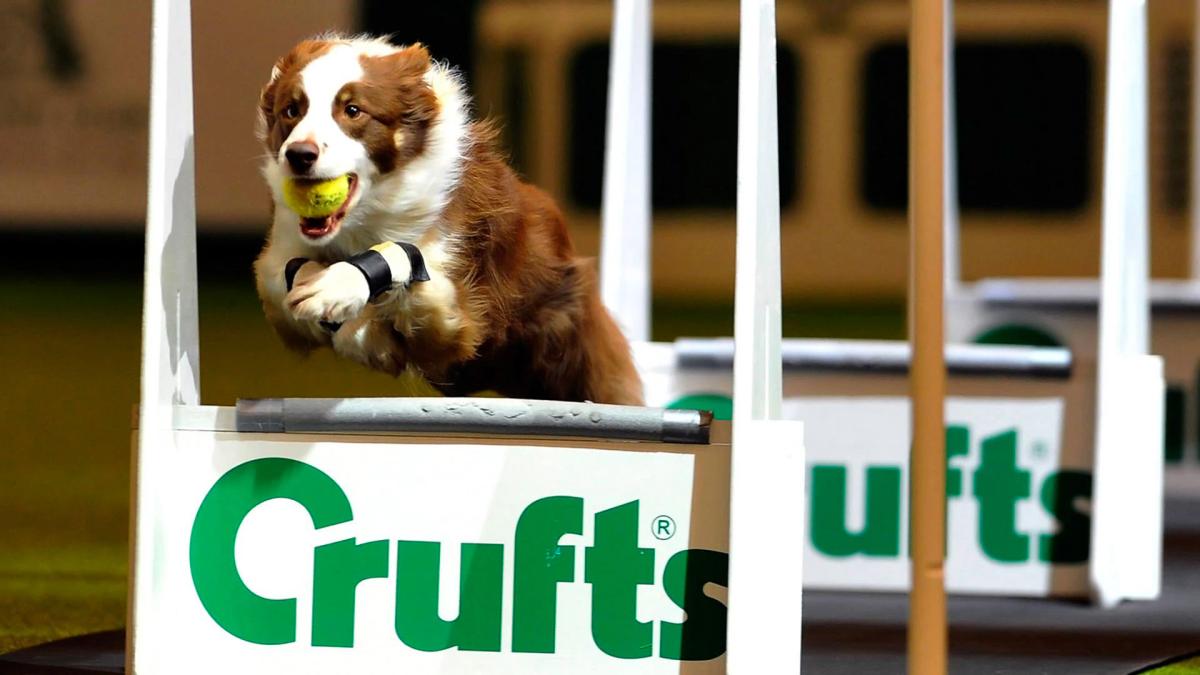
Looking for Flyball Crufts 2026 results? Junkyard Dogs won the Sunday final 2-0 against Sharks Flyball at the NEC Birmingham.
Start here for replay links and the official sources to check before you read the wider spectator guide.
Use the quick facts below for the result, then jump to the schedule, teams, qualifiers, replays or spectator tips.
New to Flyball Crufts? Start with the result, then use this guide for the rules, teams, schedule, replays and what to watch in the arena.
Junkyard Dogs won the Crufts 2026 flyball title, beating Sharks Flyball 2-0 in the Sunday final at the NEC Birmingham.
Winner | Junkyard Dogs
Runner-up | Sharks Flyball
Final score | Junkyard Dogs 2-0 Sharks
Event date | Sunday 8 March 2026
Venue | Main Arena, NEC Birmingham
Replay and sources | Crufts video, Crufts social and British Flyball Association social posts checked on 5 June 2026. Full heat times may still appear separately through BFA or Kennel Club channels.
Event: flyball relay racing in the Crufts Main Arena at the NEC.
Format: fast knockout racing with four dogs per team and seed-time based selection.
Best for spectators: watch the box turn, changeovers, fault lights and final leg sprint.
Useful checks: Crufts programme for times, Kennel Club updates for arena changes, BFA channels for team context.
Search note: if you searched "flyball Crufts", this is the Crufts Main Arena flyball competition, with four-dog relay racing, fast changeovers and knockout heats.
Main line-up: selected from BFA seed times and Kennel Club invites.
Team size: four dogs race in each heat, with reserves and support roles behind them.
Confirmed teams: use the Crufts programme, Kennel Club and BFA channels before naming any team as confirmed for 2026.
What to watch: clean changeovers, box turns, height dogs and whether the team can run fast without faults.
This guide starts with the schedule, format and what to watch in the arena. If you are looking for named-team updates, including Roadrunners Beep Beep, see the teams and selection section below.
If you are looking for Crufts flyball qualifiers 2026, the useful bit is simple: teams earn invites through BFA seed times and Kennel Club selection, then race through a 16-team knockout at the NEC. This guide covers how qualification works, the schedule and where to check the confirmed line-up.
It is written for people who search for fly ball Crufts or Crufts flyball rules and want the race explained quickly, without needing to know the sport already.
You're at Crufts 2026, or watching on Channel 4, and the flyball comes on. Two lanes, eight dogs, a crowd going absolutely mental. Tennis balls are flying, lights are flashing, and the whole thing is over in about 16 seconds.
What just happened?
If you've never watched Link Broken at Crufts before, it can look like pure chaos. But once you know what to look for, it's one of the best things on all weekend. By the end of this, you'll know what's happening, what to watch for, and why the crowd loses it when a team shaves a tenth off their time.
Fly ball (two words) is how many newcomers search for the sport before they realise the proper name is flyball (one word). At Crufts, fly ball teams race four dogs down parallel lanes in a relay knockout tournament. If you are looking for fly ball at Crufts, you are in the right place: this page covers the full schedule, teams, tickets and how to watch.
Looking for | Where to go
Crufts flyball schedule | Schedule and format section
Crufts flyball results | Results section and official sources
Crufts flyball teams | Teams and selection section
How flyball works | Rules and format section
Tickets or TV coverage | Spectator and TV sections
People search both "Crufts flyball" and "flyball Crufts". Both usually mean the same thing: the flyball racing shown in the Crufts Main Arena at the NEC.
If you are asking why Roadrunners Beep Beep are not at Crufts 2026, the likely reason is qualification format. The main Crufts flyball knockout is built around BFA seed times and Kennel Club invites, while Belgian teams such as Roadrunners Beep Beep usually appear only when invited for international or exhibition racing. Check the official Crufts programme before treating any team as confirmed.
Link Broken is a relay race between two teams of four dogs, racing side by side in parallel lanes. Each dog does the same thing:
First team to get all four dogs home without any faults wins the heat. At Crufts, heats are decided as best of three, so a team needs to win two runs to progress.
The whole race, from the first dog leaving to the fourth dog finishing, takes roughly 15-18 seconds at Crufts level. The all-time Crufts record is 14.27 seconds, set by Belgian team Roadrunners Beep Beep in 2023.
Crufts 2026 runs from Thursday 5 March to Sunday 8 March at the NEC in Birmingham. Flyball takes place in the Main Arena and is one of the headline spectator events each day. The format is a single-elimination knockout, not the round-robin system used at regular tournaments. This means every heat is win-or-go-home, which makes the pacing faster and the stakes higher.
Times can shift slightly based on how quickly other arena events finish, so arrive 20 minutes early for your chosen session. The full schedule is published on the Kennel Club Crufts website roughly two weeks before the show opens.
At a normal BFA tournament, teams race in divisions of similar speed and accumulate points across multiple rounds. At Crufts, the format is pure knockout from the first heat. Teams submit a seed time beforehand, and the bracket is drawn to avoid the fastest teams meeting early. Each heat is best-of-three runs, so a team must win two runs to progress. If a run is tied or both teams fault, it is rerun immediately. There is no time to recover from a bad start: one dropped ball or one early pass can end your Crufts campaign.
The lane surface at the NEC is a rubberised sports floor, which gives good grip but can be slippery if it gets dusty. Teams are allowed a short warm-up period before their first heat, but not between rounds. Handlers need to keep their dogs calm in the holding area, which is loud and busy, so preparation and temperament matter as much as raw speed.
Searchers using 'qualifiers' usually want one of two things: the qualified teams list, or the route teams take to get a Crufts invite. Keep the confirmed team list updated here once Crufts or the Kennel Club publishes it, and label it clearly as the official or confirmed line-up only when that source is live.
Crufts flyball is invitation-only. Teams qualify through the BFA seed list and are invited by the Kennel Club based on their rankings. The exact lineup for 2026 will be confirmed in late January, but the teams that usually feature are the fastest in British flyball.
Confirmed by Crufts or Kennel Club: team name, country or region, source and date checked.
Listed by BFA seed information: team name, seed time if available, and note that final Crufts invite may still need confirmation.
Mentioned as a team to watch: label clearly as background, not a confirmed 2026 entry.
International or exhibition team: explain that this may be separate from the main British knockout.
Roadrunners Beep Beep are a Belgian flyball team, not a British BFA team chasing a normal domestic seed place. They are famous at Crufts because they set the 14.27 second record in 2023 and have appeared in international or invitational racing, but that does not automatically put them in the 2026 main knockout.
For 2026, treat Roadrunners Beep Beep as confirmed only if the Crufts programme, Kennel Club or BFA channels list them. If they are missing from the line-up, it is usually because Crufts has selected the main teams from BFA seed times and Kennel Club invites, with international appearances handled separately.
The teams below are examples of the type of fast British flyball sides spectators often look for around Crufts. Do not treat this as the confirmed 2026 line-up until the official Crufts programme, Kennel Club or BFA source has published the entries.
Crufts has occasionally included international teams in invitational or exhibition races. Belgian team Roadrunners Beep Beep are the best-known example after setting the all-time Crufts record of 14.27 seconds in 2023. These appearances are separate from the usual British team qualification route, so always check the Crufts programme, Kennel Club and BFA channels before saying an international team is confirmed for 2026.
The qualification process runs through the British Flyball Association seed list. Teams submit their fastest recorded time from the previous 12 months, and the Kennel Club invites the top 16 to 24 teams based on those seeds. A team must be registered with the BFA and have competed in at least three BFA-sanctioned tournaments in the qualifying period. The seed time is an average of the team's best runs, not a single peak performance, so consistency matters. Teams that fault heavily or have irregular attendance struggle to make the cut, even if they have occasional fast runs.
For the confirmed Crufts flyball qualifiers, check the Crufts programme, Kennel Club updates and British Flyball Association channels close to the event. Flyball Hub should list teams as confirmed only when an official source has published them.
Junkyard Dogs won the Crufts flyball 2026 final, beating Sharks Flyball 2-0 on Sunday 8 March in the Main Arena at the NEC Birmingham. Crufts social confirmed the score and the British Flyball Association congratulated Junkyard Dogs as the 2026 Crufts Flyball Champions. Full heat times and complete bracket details may still be published separately by BFA or Kennel Club channels.
Winner | Junkyard Dogs
Runner-up | Sharks Flyball
Final score | Junkyard Dogs 2-0 Sharks
Event date | Sunday 8 March 2026
Venue | Main Arena, NEC Birmingham
Replay | Crufts video and Channel 4 coverage
Source checked | Crufts social and British Flyball Association social posts on 5 June 2026
If you missed the final, Channel 4 broadcast the Sunday afternoon session, and the Crufts YouTube channel carries full replays of all four days.
Below is a quick look at the teams that have won Crufts flyball over the last few years.
Junkyard Dogs are listed as the 2026 Crufts flyball champions after beating Sharks Flyball 2-0 in the final. Check BFA or Kennel Club channels for any later release of full heat times.
The difference between a good flyball team and a great one comes down to details that happen in fractions of a second. Here's what to keep your eyes on.
This is the hardest thing to get right in flyball, and the biggest gap between top teams and everyone else.
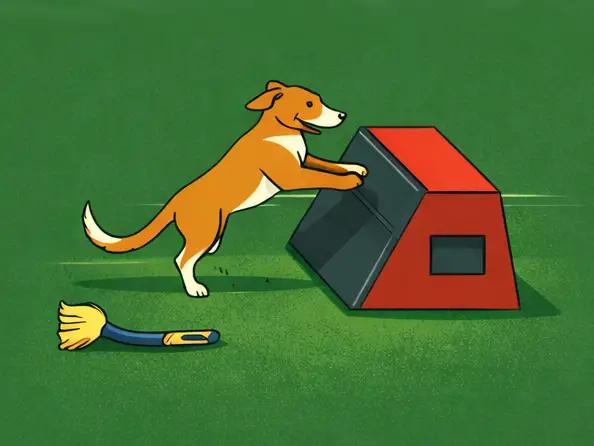
When a dog reaches the box at the end of the lane, they don't just grab the ball and turn around. The best dogs perform a Link Broken: they hit the box with their feet, push off, and they're already facing back up the lane before they've fully collected the ball. Same idea as a swimmer pushing off the wall at the end of a length.
Watch the box turns closely. A dog that hits the box cleanly and spins off in one movement will be noticeably faster than one that arrives, grabs the ball, then turns around as a separate step. At Crufts level, the box turn is worth fractions of a second, and in a sport decided by fractions, that's a big deal.
A bad box turn can also cause the ball to fly out sideways, or the dog might not trigger the box properly and come away without the ball. Both count as faults.
This is where flyball gets really tactical.
The pass is the moment where one dog crosses the start/finish line coming back, and the next dog is released going out. In a perfect pass, the two dogs cross nose-to-nose at the line, with the outgoing dog already at full speed as the returning dog arrives.
Here's the catch: the outgoing dog cannot cross the line before the returning dog does. If they do, it's an early pass, and that dog has to run again at the end. The electronic timing system tracks these crossings to the thousandth of a second.
The best teams at Crufts will aim for passes where the gap between the two dogs is almost nothing — maybe a tenth of a second. Getting this right across all four changeovers in a race can be worth over half a second of total time. Getting it wrong means re-runs, lost momentum, and often a lost heat.
Watch the passes and you'll see some teams are clearly sharper than others. Tight passes look thrilling. Sloppy passes, where there's a visible gap between dogs, cost time and can swing the result.
At each end of the lane, you'll see a set of lights (similar to traffic lights in some setups). These are part of the electronic judging system (EJS) and they track everything: start times, passes, and finish times.
If a fault occurs (early pass, missed jump, dropped ball), a fault light comes on. When this happens, the team has to re-run the dog that made the mistake after all four dogs have completed their runs. This adds time and pressure, because the other team is usually already finished and waiting.
Common faults you'll see at Crufts:
When you see a team suddenly running a fifth dog after the fourth has come home, that's a re-run to correct a fault.
You might notice that the jumps look surprisingly low — sometimes barely above the ground. That's intentional.
Jump heights in flyball are set by the team's Link Broken, the smallest dog in the line-up. Having a smaller dog on the team means lower jumps for every dog, which means faster times for the bigger, faster dogs. This is why you'll often see three Border Collies or Whippets running alongside one much smaller dog like a Jack Russell, a Papillon, or a Shetland Sheepdog.
It's all within the rules, and it's a real part of the strategy. The height dog still has to run the full course cleanly and quickly. A slow height dog costs the team more time than the lower jumps save. Getting that balance right is the tricky bit.
Crufts uses a single-elimination knockout format:
Each match is best of three runs. Win two, you advance. Lose two, you're out.
There's no group stage and no consolation bracket. If you lose in the Last 16, your Crufts is over. That creates real tension from the first round, because even the strongest teams can be knocked out by one bad heat.
By Sunday's final, you're watching the two best teams from a field of sixteen go head-to-head for the title. The crowd is usually on their feet for most of it.
A few benchmarks so you know what you're looking at:
Time What it means Under 15 seconds World class. You're watching one of the fastest teams on the planet. 15-16 seconds Elite. This is where most Crufts teams operate. 16-17 seconds Very competitive. Still faster than most club teams will ever run. 17-18 seconds Fast at club level, but might struggle against the top Crufts teams. 18-20 seconds Good recreational team speed.
Remember, that's the total time for all four dogs to complete their runs — roughly 4 seconds per dog, including changeovers. Each individual dog is covering about 15 metres of jumps, a box turn, and 15 metres of jumps back, all in under 4 seconds.
When you see a time flash up on screen, now you'll know whether you just watched something special.
Flyball at Crufts level is dominated by a handful of breeds and their crosses:
You'll also spot smaller breeds running as height dogs:
One rule at Crufts is that each team must include at least one Kennel Club registered pedigree dog running in every heat. You can't stack a team entirely with crossbred specialists. This keeps breed diversity in the competition, which makes sense given Crufts is a pedigree dog show at heart.
Flyball was introduced to Crufts in 1990 as a demonstration sport and became a full championship event in 1995. Since then it has grown into one of the most popular spectator attractions at the show, regularly filling the Main Arena to capacity.
Before flyball, the Main Arena at Crufts was dominated by obedience and breed judging. The introduction of flyball brought a new audience: younger spectators, families, and people who had never watched a dog show before. It is now common to hear handlers say they discovered flyball by accident while at Crufts for another event, which speaks to how effective the arena placement is for recruitment.
The original Crufts flyball format in the 1990s used a simple single-elimination bracket with four-dog teams and no height dog requirement. The height dog rule was introduced in 2003 to preserve breed diversity and prevent teams from stacking entirely with Border Collies. The best-of-three heat system replaced single-run heats in 2010, reducing the impact of one-off faults and giving teams a chance to recover from a bad start. The current format, including the seed-time qualification and the 16-team knockout bracket, has been in place since 2015.
Crufts 2026 ran from 5-8 March at the NEC Birmingham. The flyball competition followed the single-elimination knockout format, with 16 teams starting on Thursday and the final taking place on Sunday afternoon in the Main Arena. Official timings and the full bracket are published by the British Flyball Association after the event.
If you are looking for the official race times, heat sheets, and final placements, the BFA website is the primary source. Channel 4 broadcast the Sunday final, and highlights and replays are usually available on the Crufts YouTube channel.
Flyball results at Crufts are straightforward but there is more detail than you might expect. Each heat produces a winning team and a race time. The time is the total from the first dog crossing the start line to the fourth dog crossing the finish line. If a dog faults, the team reruns that dog and the time continues until the clean run is complete. This means the published time includes any reruns, so a team's raw speed and their official time can differ.
The BFA also tracks seed times for each team throughout the season. A team's Crufts seed time is based on their best average from the previous 12 months, so the teams that reach the final are not just the fastest on the day, but the most consistent over the year.
For the 2026 final, Junkyard Dogs beat Sharks Flyball 2-0. Full heat sheets, race times and any records should still be checked against later BFA or Kennel Club updates if you need the complete bracket.
If you're heading to Crufts in person:
If you're catching it on Channel 4 or streaming:
Crufts is the biggest dog show in the world, and tickets sell out for the most popular days. If you are going specifically for flyball, you need to plan ahead because the best arena seats fill up hours before the first heat.
Tickets go on sale in November the year before. Sunday tickets sell out first, followed by Saturday. If you want to watch the final live, book as soon as tickets are released. Thursday and Friday tickets usually remain available closer to the date.
Inside the NEC, the Main Arena is off Hall 1. Follow the signs from the entrance or ask any steward. The arena is fully accessible for wheelchair users, and there are designated viewing areas with good sightlines.
The Crufts flyball 2026 teams are expected to come from BFA seed times and Kennel Club invites. Treat the line-up as confirmed only when Crufts, the Kennel Club or BFA channels publish it. Until then, Flyball Hub should explain the qualification route, likely team types and where to check the official team list.
Crufts flyball is a relay race for teams of dogs. Each dog jumps a line of hurdles, triggers a flyball box, catches a tennis ball and races back before the next dog goes. At Crufts, teams race in a fast arena format, with spectators watching the changeovers, box turns, fault lights and final knockout races.
Roadrunners Beep Beep are a Belgian team, so they do not normally qualify through the same BFA seed-time route as British teams in the main Crufts flyball knockout. If they are not listed for 2026, it usually means they have not been announced as an international or invitational entry. Check the official Crufts programme, Kennel Club updates and BFA channels for the confirmed line-up.
The confirmed Crufts flyball qualifiers should appear in the Crufts programme and Kennel Club event information once the line-up is final. This page explains how teams qualify and should be updated with the confirmed 2026 team list when it is published.
Why do some dogs run after all four have finished?
That's a re-run. One of the four dogs had a fault (early pass, missed jump, dropped ball) so they have to run again to correct it. The team's time doesn't stop until the re-run dog crosses the finish line cleanly.
Why are the jumps so low?
Jump height is set by the smallest dog on the team (the height dog). Lower jumps mean faster times for the bigger dogs. It's a deliberate team strategy.
Why do the dogs look so different on the same team?
Flyball teams aren't breed-specific. You'll see a mix of breeds and sizes on most teams — typically fast dogs like Border Collies and Link Broken alongside a smaller height dog. Each dog has a role.
Is it the same format as regular flyball competitions?
Not quite. Regular flyball tournaments use a round-robin division system where teams race multiple heats against teams of similar speed. Crufts uses a single-elimination knockout, which is higher stakes and more dramatic.
The Crufts flyball final usually takes place on Sunday afternoon at approximately 14:00. The exact time is confirmed in the final schedule published by the Kennel Club two weeks before the show. Sunday is the busiest day, so arrive at the Main Arena at least 30 minutes early to get a seat.
Day tickets for Crufts cost between £25 and £35 for adults, depending on the day. Weekend days are more expensive than Thursday. Child tickets are £12-£18. Family tickets offer the best value at around £65-£80 for two adults and two children. Book directly from the Kennel Club website to avoid inflated prices from resellers.
Junkyard Dogs and Sharks Flyball were the Crufts flyball 2026 final teams. Junkyard Dogs won the final 2-0, based on Crufts social and British Flyball Association updates checked on 5 June 2026.
No. Only dogs entered in a competition or event are permitted inside the NEC. Spectator dogs are not allowed. If you want to watch flyball, you will need to leave your dog at home or with a sitter.
Can I take my dog to watch?
Dogs are welcome at Crufts, but they need to be entered in a competition or event to attend. Spectator dogs are not permitted. If you want to watch, you'll go without your dog.
How do I start flyball with my own dog?
If watching Crufts has inspired you, have a look at our Link Broken? guide and Link Broken. Most clubs welcome beginners and run taster sessions. Your dog doesn't need to be a Link Broken — any Link Broken can play.
Junkyard Dogs won Crufts flyball 2026, beating Sharks Flyball 2-0 in the Sunday final at the NEC Birmingham. Crufts social confirmed the 2-0 score and the British Flyball Association congratulated Junkyard Dogs as 2026 champions.
Start with the results section above for the winner, finalists and score. For official checks, use BFA channels for heat times and brackets, Crufts social or replay clips for the winner and score, and Channel 4 or Crufts video for the Sunday final replay.
The Crufts YouTube channel carries full event replays, including all four days of flyball. Channel 4 also broadcast the Sunday afternoon final live.
Tickets for Crufts 2026 are available from the official Crufts website and AXS. Day tickets range from about £25 to £35. Sunday tickets sell out first because the final is that afternoon.
Flyball Crufts usually refers to the flyball competition held at Crufts, where selected teams race four dogs each in fast relay heats in the Main Arena. It is popular because it is the fastest team dog sport in the UK, and at Crufts it is shown to a full crowd, with the final broadcast on Channel 4.
Yes. Fly ball and flyball are the same sport. The single-word spelling, flyball, is the official term used by the British Flyball Association and at Crufts. Many people initially search for fly ball Crufts because that is how the activity sounds when spoken.
You can watch fly ball at Crufts in person at the NEC Birmingham or live on Channel 4 during the Sunday afternoon final. Full details on tickets and broadcast times are above.