
Pros
- +Blistering straight-line speed - among the fastest breeds in flyball
- +Light and agile, easy on their joints over a long career
- +Calm and quiet in the paddock between runs
- +Low maintenance compared to high-drive herding breeds
- +Surprisingly good box turns once trained properly
Cons
- -Ball drive needs building - not naturally obsessed like collies
- -Sighthound independence can make recall inconsistent early on
- -Thin skin and lean build makes them prone to minor injuries
- -Can be noise-sensitive at loud competitions
Are Whippets Good at Flyball?
They're better than most people expect. Whippets have a reputation as couch potatoes who occasionally sprint, but put one in a flyball lane and you'll see something special. These dogs are fast. Properly fast. The kind of fast that makes seasoned handlers do a double-take at the timing display.
Whippets have become a regular sight at UK flyball competitions over the past decade. They're not as common as Border Collies or Staffies, but the ones that compete tend to post seriously quick times. If you can build the drive and nail the training, a Whippet is a legitimate weapon on any team.
Whippet Physical Attributes for Flyball
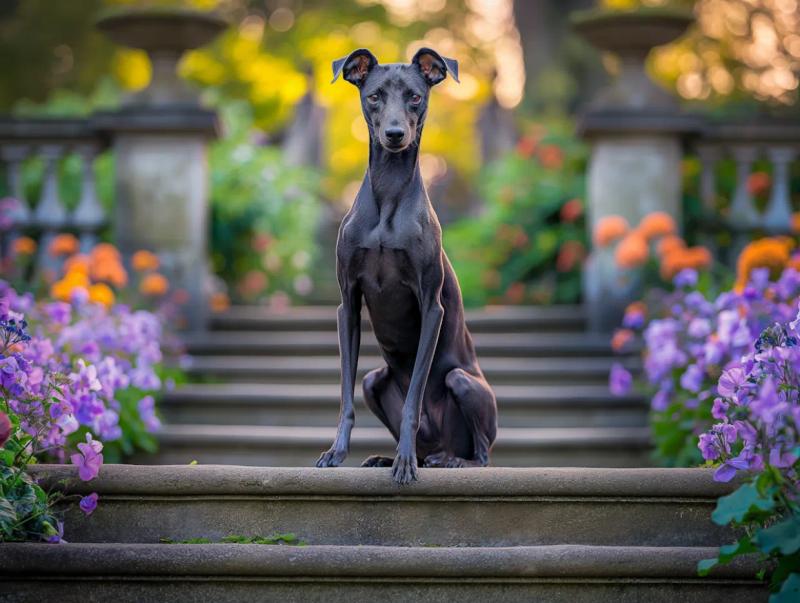
Whippets are built to sprint. At 44-51 cm at the shoulder and typically 9-15 kg, they're lean and carry almost no wasted weight. Every gram of muscle is there for speed.
Their deep chest and long legs give them an enormous stride length relative to their size. Down the lane, a Whippet in full flight looks effortless - that classic double-suspension gallop covering ground at a rate that belies their slim frame.
How Fast Can a Whippet Run Flyball?
Quick Whippets run sub-4-second passes without breaking a sweat. The fastest are pushing into the 3.6-3.8 second range, which puts them right up there with the quickest Border Collies. Their acceleration is explosive - zero to flat-out in a couple of strides.
The box turn is where things get interesting. Whippets are lighter than collies, which means less impact force on the box. But that lean frame can make the swimmer's turn feel less natural at first. Once they've got it, though, the combination of a quick turn and raw speed off the box is devastating.
They're too tall to be height dogs, sitting in that middle ground where they benefit from lower hurdles set by a smaller teammate.
Temperament & Drive
Here's where Whippets differ from your typical flyball breed. They're sighthounds, and that comes with a particular mindset. A Border Collie lives to work. A Whippet works when it suits them.
Ball drive varies massively between individual Whippets. Some are tennis ball mad from puppyhood. Others look at a ball like you've offered them a mouldy sock. Drive can be built though, and tug toys often work better than balls as initial motivators. Many successful flyball Whippets started on a tug or a rabbit skin before transitioning to the ball.
In the competition environment, Whippets have a surprising advantage - they're calm. While Border Collies are screaming in their crates and Staffies are bouncing off the walls, your Whippet is probably asleep under a blanket. That calm temperament means they come to the line fresh and focused, not already running on adrenaline.
Noise sensitivity can be an issue though. Some Whippets find the barking and shouting overwhelming, especially at their first few competitions. Start with quieter practice sessions and bring high-value treats so they associate the environment with good things.

Training a Whippet for Flyball
Training a Whippet for flyball requires patience and a different approach to herding breeds. Forget repetition-based drilling - Whippets get bored. They'll give you three brilliant runs, then wander off to sniff something more interesting. Keep sessions short, exciting, and always end on a high.
Box turns take longer to teach than with a collie. That sighthound frame wasn't designed for tight turns, and you'll need to build the muscle memory gradually. Props like a box ramp and target mats help enormously. Don't rush this - a good box turn is the difference between a competitive Whippet and one that loses half a second every pass.
Recall is the big one. Sighthounds are notorious for selective hearing, and a Whippet that spots something moving at the far end of the hall might decide that's more interesting than coming back to you. Build recall like your life depends on it, using high-value rewards consistently. In the structured flyball environment though, with the ball as motivation, most Whippets recall reliably once they understand the game.
One breed-specific tip: motivation is everything. Find what your Whippet loves and use it relentlessly. For some it's a squeaky ball, for others it's a piece of liver cake. A motivated Whippet is unstoppable. An unmotivated one is a garden ornament.
Health & Longevity in the Sport
Whippets are robust dogs with fewer inherited health concerns than most flyball breeds. Their light frame puts less stress on joints, which pays off over a long career of sprinting and turning.
Watch for muscle injuries - particularly in the hindquarters and shoulders. That explosive acceleration puts serious load through lean muscle, and a pulled muscle can sideline a Whippet for weeks. Proper warm-ups aren't optional with this breed. Get them trotting and stretching before any fast work.
Their thin skin tears more easily than thicker-coated breeds, so minor cuts and scrapes are common. Keep a first aid kit handy.
Competitive careers are typically long - many Whippets compete happily until 9-10 years old, thanks to their light build and generally sound structure. Cardiac screening is recommended, as some lines carry a predisposition to heart murmurs.
The Verdict
Whippets are fast. Really fast. And they bring that speed in a quiet, easy-going package that makes them a pleasure to live with between competitions.
They're best suited for handlers who enjoy the training challenge. You won't get the instant results you'd see with a collie - building drive and nailing that box turn takes time. But the payoff is a dog that can post times that make the rest of the team grin.
If you want a competitive flyball dog that doesn't need three hours of mental stimulation every day just to stay sane, the Whippet deserves serious consideration. Just bring a blanket for the crate. They'll want one.