Pros
- +Quick off the mark with a low centre of gravity
- +Ball drive that borders on obsession - they live for the retrieve
- +Compact and muscular build absorbs box impact well
- +Lowers jump heights for the team compared to taller breeds
- +Tough as anything - they rarely pull out of competition
Cons
- -Can be dog-reactive, needs solid socialisation work
- -Arousal levels go through the roof - managing the switch-off is hard
- -Short muzzle means they overheat faster than longer-nosed breeds
- -Stubbornness kicks in when they decide they know better
Staffordshire Bull Terrier speed: how fast can a Staffy run?
A fit Staffordshire Bull Terrier can run about 25-30 mph in a short straight-line burst, which is the simple answer most people are looking for. In flyball, that normally means pass times around 4.3-4.8 seconds for a good Staffy, with quicker dogs dipping below 4.3 seconds. That makes a Staffy quick for a bull breed, but still behind the very fastest Border Collies and Whippets on raw lane speed.
Are Staffordshire Bull Terriers Good at Flyball?
Really good, actually. Staffies are one of the most popular flyball breeds in the UK and for good reason. They're quick, they're tough, and they want that ball more than almost anything else in the world. Walk into any BFA competition and you'll see them everywhere - there's even a dedicated all-Staffie team, the Staffordshire Bull Terrierists, competing on the circuit.
They're not the outright fastest breed on the lane. Border Collies and Whippets have them beat on raw speed. But Staffies bring something else - raw power and sheer bloody-mindedness that makes them proper competitors. They don't do anything half-heartedly.
Physical Attributes for Flyball
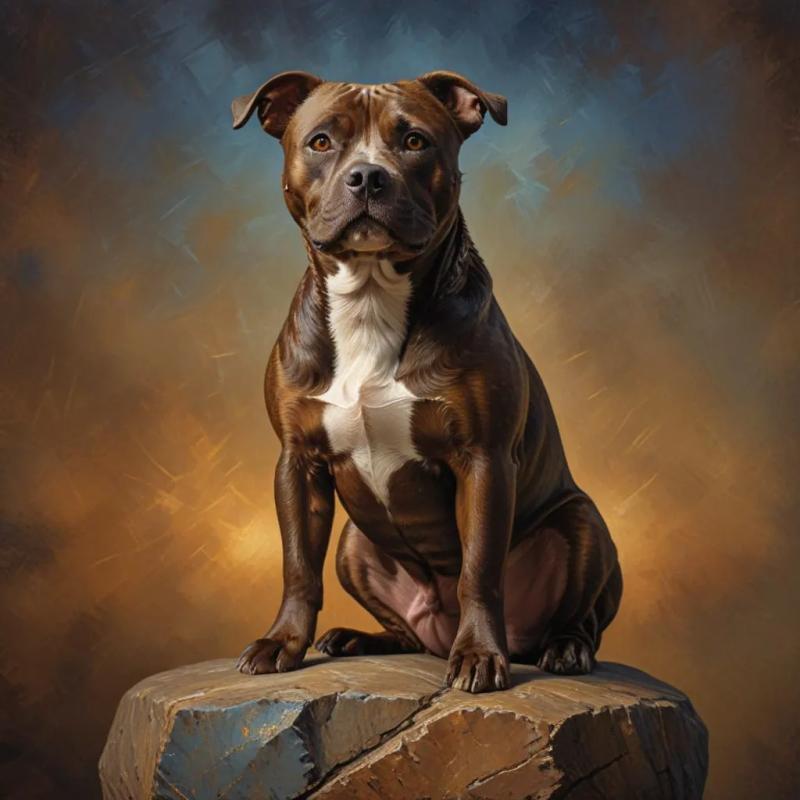
Staffies are compact and surprisingly low to the ground. Most stand between 14-16 inches at the shoulder and weigh 11-17 kg. That stocky, muscular build might look more suited to pulling carts than racing, but it actually works well in flyball.
Their low centre of gravity gives them stability through the box turn. Where taller dogs have to fold themselves down to hit the box, a Staffie is already there. That muscular frame also means they absorb the impact of the turn better than lighter breeds - they can slam into a box turn hundreds of times over a career and their body handles it.
The downside of all that muscle is weight relative to their size. A Staffie is dense, and that density costs them a fraction on straight-line speed. They make up ground on the turn though, where their compact build and low stance let them fire off the box like a cannonball.
How Fast Can a Staffordshire Bull Terrier Run Flyball?
A Staffy can run at about 25-30 mph in a short burst, although flyball performance is better judged by pass times than top speed. A good Staffie will post pass times around 4.3-4.8 seconds. The quicker ones can dip below 4.3, which puts them firmly in competitive territory. They're not matching the sub-4-second Border Collies, but they're considerably faster than most people expect from a bull breed.
Their top speed is around 25-30 mph in a straight line, though they can only sustain it for short bursts. Perfect for flyball's 51-foot sprint, less useful for anything longer.
For context, Staffies usually sit behind Border Collies and Whippets on raw speed, but ahead of many heavier pet breeds. Their strength is acceleration, commitment to the ball and a powerful box turn rather than long-distance pace.
Tracking your dog's run times? Add your Staffordshire Bull Terrier to Flyball Hub and keep notes on pass times, box turns and heat management across training sessions.
They're too tall to be proper height dogs, but at 14-16 inches they do bring the hurdles down compared to running with Border Collies or Shepherds. A team with a Staffie will often see jump heights drop a couple of inches, which helps the bigger dogs on the team.
Temperament & Drive
Ball drive in a Staffie is bordering on fanatical. These dogs fixate on that tennis ball and nothing else exists. That single-mindedness is gold in flyball - you never have to worry about motivation. The ball is their entire world for those few seconds on the lane.
The flipside is managing what happens between runs. Staffies get wound up fast and calming them back down is a project in itself. A hyped-up Staffie in the warm-up area, barking its head off and pulling toward the lane, is a scene most flyball handlers will recognise. Crate training and "off switch" work are non-negotiable if you want to keep your sanity and your dog's focus.
Dog reactivity is the elephant in the room. Not all Staffies have issues, but enough do that it needs mentioning. Flyball involves your dog running alongside unfamiliar dogs, passing close to them during changeovers, and being surrounded by barking dogs all day. A dog-reactive Staffie is a liability at competitions. Early and ongoing socialisation is critical - start it long before you go anywhere near a flyball lane.
When they're well-socialised though, most Staffies are brilliant in the competition environment. They thrive on the excitement and the noise actually seems to amp them up in a productive way. They feed off the atmosphere.
Training Considerations
Staffies learn the basic flyball pattern quickly enough. Run out, get ball, come back - they get it. Their retrieve instinct is strong and they're eager to work for you. The fundamentals click into place within a few sessions for most dogs.
Box turns need the most attention. The common mistake with Staffies is letting them crash into the box rather than executing a proper swimmer's turn. They've got the power to just barrel in, grab the ball, and muscle their way back around. It works, but it's slow and it's hard on their body. Invest time early in teaching a clean turn - use props to create a V-shape around the box that forces them to arc into it rather than hitting it head-on.
The stubbornness is real. Staffies will absolutely decide they've figured out a better way to do something and ignore your plan entirely. Short, varied training sessions work best. The moment a Staffie gets bored, you've lost them. Keep it exciting, mix things up, and don't drill the same thing for twenty minutes straight.
Arousal management should start from day one. A Staffie that can't switch off between runs is a Staffie that makes errors. Crate games, mat work, and impulse control exercises matter just as much as box work. Teach them that calm behaviour earns them the thing they want most - another go on the lane.
When Can a Staffordshire Bull Terrier Start Flyball?
BFA rules require dogs to be 18 months old to compete. Foundation work can start much earlier - recalls, ball drive games, and socialisation from puppyhood. Given the breed's tendency toward dog reactivity, getting them comfortable around other dogs early is more important than any flyball-specific training.
Health & Longevity in the Sport
Staffies are generally robust dogs, which helps in a sport as physically demanding as flyball. Their muscular build provides some natural protection against the repetitive impacts of box turns and sprinting.
The main concerns are hip and elbow dysplasia - get both parents scored. Patellar luxation (slipping kneecaps) is also common in the breed and particularly relevant for flyball, where the sudden direction changes put strain on the knees. Cruciate ligament tears crop up too, especially in dogs that haven't been properly conditioned.
Watch the overheating. Staffies have shorter muzzles than the herding breeds that dominate flyball, which means they're less efficient at cooling themselves. On warm competition days, they need more rest between runs and access to water and shade. Don't push a panting Staffie back out onto the lane.
Because Staffies have a shorter muzzle and a dense, muscular build, do not chase speed work in hot weather. Keep sprint sessions short, give full recovery between runs and stop if the dog is panting hard or losing sharpness.
A fit Staffie can compete from around 2 years old through to 7-8, sometimes longer if they've been well maintained. Regular physio checks and proper warm-ups go a long way. The breed's general toughness means they'll often hide discomfort, so don't rely on them to tell you when something hurts.
The Verdict
Staffies are proper flyball dogs. They're fast enough to compete at a good level and tough enough to keep doing it for years. Motivation is never going to be your problem with this breed.
They're best for handlers who are prepared to put in the socialisation work and can manage a dog that runs hot. If you can nail the off-switch training and keep on top of the dog-reactivity question, a Staffie will give you years of competitive flyball and love every second of it.
Not a breed for a quiet life - but then flyball people don't tend to want one.