•Dalton Walsh
Discover why small dogs are so valuable in flyball. Learn how height dogs work, the best breeds, and what it takes to train one.
By Dalton Walsh
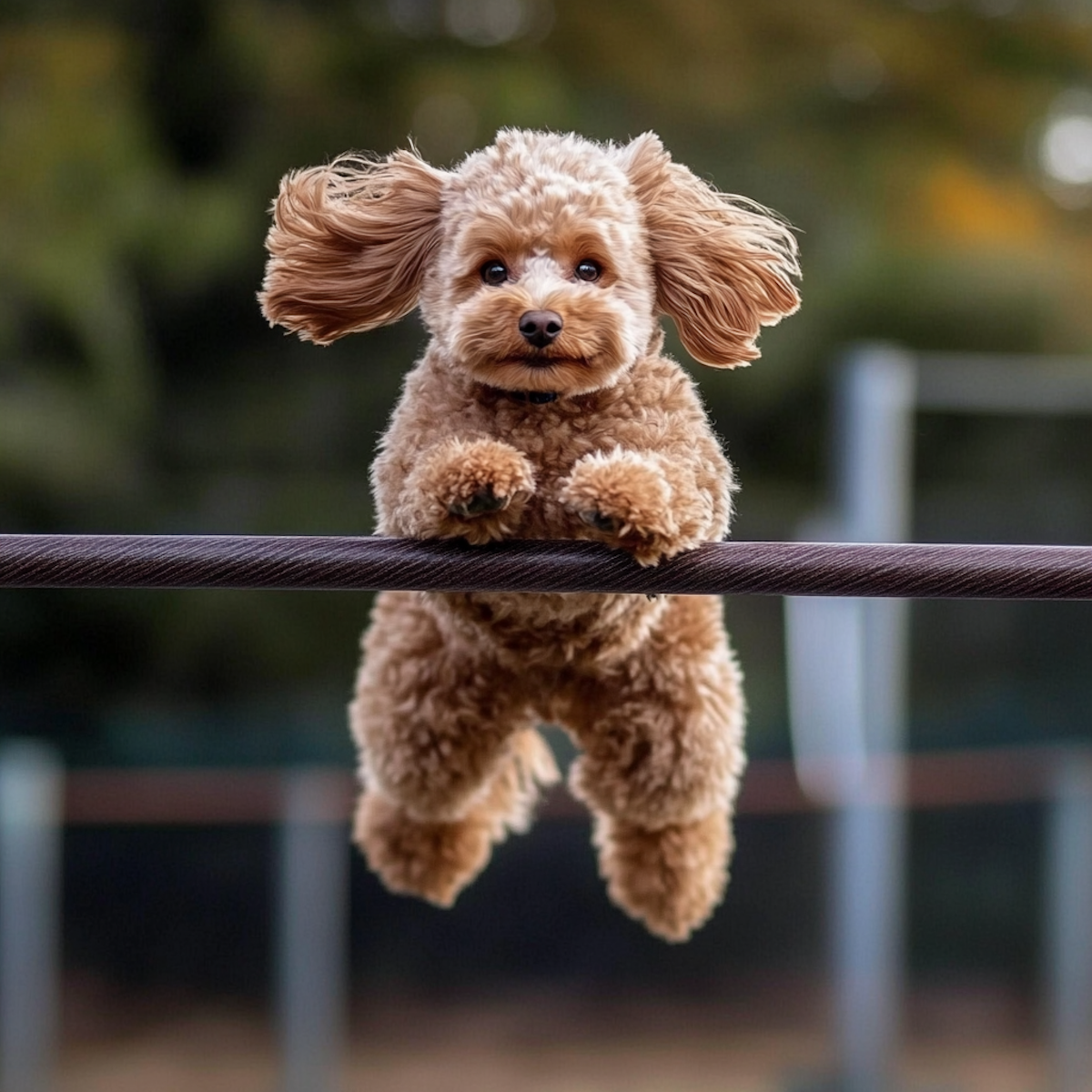
If you've watched flyball for the first time, you might have noticed something odd. Teams of big, athletic Border Collies and Spaniels... and then one tiny terrier in the mix. What's going on there?
That little dog isn't just tolerated. They're often the most valuable member of the team. This is the world of height dogs - one of flyball's stranger strategic elements.
In flyball, all four dogs on a team run over the same jumps. But jump height isn't fixed - it's calculated based on the smallest dog in the team.
The formula varies slightly depending on which organisation you're racing with:
Organisation How Height Is Calculated Jump Range BFA (UK) 6" below withers of smallest dog 6" - 12" UKFL (UK) Based on ulna measurement 6" - 12" NAFA (North America) 5" below withers of smallest dog 7" - 14"
So if your smallest dog measures 13" at the withers under NAFA rules, your team jumps 8". If they measured 19", you'd be jumping 14" (the maximum).
The "height dog" is the smallest dog on the team - the one whose measurement determines everyone's jump height.
Bigger dogs run faster over lower jumps. That's the short version.
When a 20" Border Collie has to clear 14" jumps, they're working harder than when they clear 8" jumps. Lower jumps mean less effort per jump, which means more speed, less fatigue, and less stress on joints over a weekend of racing.
The strategic play is obvious: put three fast, big dogs on your team, add one small, fast dog, and now your big dogs are flying over much lower hurdles than the competition.
This is why teams actively recruit height dogs. A quick Jack Russell or terrier mix can be the difference between a good team and a great one. Some clubs will bend over backwards to accommodate a handler with a promising small dog.
Let's make this concrete with BFA rules (6" subtracted from withers):
Height Dog's Withers Team Jump Height 12" 6" (minimum) 14" 8" 16" 10" 18" 12" (maximum)
Now imagine two teams racing:
Team B's Border Collies are barely breaking stride over those 6" jumps while Team A's dogs are putting in real effort at 12". Over a weekend of racing dozens of heats, that difference adds up.
Not all small dogs make good height dogs. You need speed, drive, and the ability to handle the chaos of a flyball competition. Here's what tends to work:
The classic height dog. Jack Russells are naturally springy, fast, and have more drive than dogs twice their size. They're built to chase things, which is exactly what flyball requires.
Their enthusiasm can be a double-edged sword - they need handlers who can match their intensity. A good tug toy helps channel that energy. But a well-trained JRT is a formidable height dog.
Solid, reliable, and surprisingly quick. Border Terriers don't have the explosive speed of a JRT but they're steady performers. They're easier to train than some terriers and cope well with the competition environment.
Another terrier favourite. Patterdales are fearless and fast, with excellent drive. They're common in UK flyball teams.
A small Whippet can be an exceptional height dog - they've got speed in their DNA. The catch is that Whippets can be harder to train for flyball. They're sighthounds, which means their instinct is to chase by sight rather than retrieve. Many struggle with holding the ball reliably.
The Whippets you see in top teams have been trained hard. They're not beginner-friendly height dogs.
At the competitive end of the sport, teams breed their own height dogs. The most common crosses involve combinations of:
These dogs are bred specifically to be around 13-16" tall with the speed and drive to compete at the highest level. They're essentially custom-built flyball machines.
Fair warning: purpose-bred flyball dogs are a lot of dog. They're not pets that happen to do flyball - they're serious athletes bred for the sport. Getting one from a good breeder usually means being an established competitor yourself.
There's one problem with very small dogs - they need to trigger the flyball box.
The box has a spring-loaded pedal. When your dog hits the pedal with enough force, a ball fires out for them to catch. Bigger dogs slam into the box with plenty of momentum. Small dogs? Not so much.
Very small height dogs sometimes have to fully jump onto the pedal to trigger it. This can slow them down if the box isn't set up right.
Good teams adjust for this:
If you're training a very small height dog, talk to your club about box settings. A box that's calibrated for a 25kg Border Collie might not fire reliably for a 5kg terrier.
Size isn't everything. A slow, unreliable small dog is worse than no height dog at all. What you're looking for:
Speed. The height dog still needs to complete their run in a reasonable time. A 6-second height dog negates the time advantage they give the bigger dogs. Aim for a dog that can run competitively, even if they're not the fastest on the team.
Ball drive. Like any flyball dog, height dogs need to want that ball. Some small breeds are less naturally ball-motivated than retrievers or collies. Smaller balls can help with motivation - they're easier for little mouths to grab.
Reliability. A height dog that drops balls, misses the box, or gets distracted loses more time than they save. A solid recall and consistency matter more than occasional brilliance.
Temperament. Flyball competitions are loud, chaotic environments. Your height dog needs to handle that without falling apart. Nervous dogs struggle. Reactive dogs can be a problem in close quarters.
Good box turn. This is trainable, but some dogs take to it more naturally than others. A poor box turn is a problem for any flyball dog, but small dogs especially can't afford to waste time on sloppy turns.
Training a small dog for flyball isn't fundamentally different from training a bigger dog, but there are some specific things to consider.
Small dogs need a solid swimmer's turn just like everyone else - arguably more so, because they can't muscle through a sloppy turn the way a bigger dog might. Work on this carefully with props before moving to a full box.
Pay attention to whether your dog can trigger the box reliably. If they're struggling, work with your club to adjust the spring tension or try different boxes.
Height dogs run as part of the team, which means they need to pass other dogs cleanly. Some small dogs find it intimidating to run towards a much larger dog at full speed. Build their confidence gradually with pair work.
Some small breeds - Whippets especially - can struggle with holding the ball in their mouth while running. If your dog tends to drop or mouth the ball, address this in training before it becomes a competition problem.
Small dogs can be more easily overwhelmed by the flyball environment. Socialise them to it early. Bring them to training as spectators before they start running. High-value treats help create positive associations with the chaos. Let them get used to the noise, the barking, the general mayhem.
Not every team has one. Not every team needs one.
If your club is casual and focused on fun rather than competitive times, the jump height advantage might not matter much. A team of four medium-sized dogs can have a brilliant time doing flyball without worrying about optimising jump heights.
But if you're interested in competitive racing, or your team is looking to improve times, a height dog is a genuine strategic advantage. The top teams in the country all run with height dogs. It's not cheating - it's just smart team building.
If you've got a small dog with drive and speed, your local flyball club would probably love to hear from you.
Before you get too excited about your Jack Russell being a height dog, you'll need to get them measured officially.
BFA measurement: Done at the withers (highest point of the shoulder blades) using an approved measuring device. Dogs go on a master height list once measured.
UKFL measurement: Uses an ulna measurement (from elbow to the bone above the carpal pad). This method was introduced to reduce stress - some dogs find withers measurement uncomfortable.
NAFA measurement: At the withers using a laser level apparatus. Dogs can get a temporary measurement under 24 months, then need two matching measurements from different officials for a permanent height.
Measurements are typically done at competitions or through measuring officials. Your club can tell you how to arrange it.
Dogs younger than 18-24 months (depending on organisation) may still be growing, so early measurements are often temporary.
What is a height dog in flyball?
The height dog is the smallest dog on a flyball team. Their measurement at the withers (or ulna, depending on the organisation) determines the jump height for the entire team. Smaller height dogs mean lower jumps for all four dogs, which is a strategic advantage.
Why are small dogs valuable in flyball?
Bigger dogs run faster over lower jumps. By having one small dog set a low jump height, the three larger dogs on the team can run faster with less effort. This is why teams actively recruit handlers with fast, small dogs.
What breeds make good flyball height dogs?
Jack Russell Terriers are the classic choice - fast, driven, and the right size. Border Terriers, Patterdale Terriers, and small Whippets also work well. At competitive levels, teams often use purpose-bred crosses involving Whippets, Staffies, Border Collies, and JRTs.
How small does a height dog need to be?
It depends on the rules. Under BFA rules, a dog measuring 12" at the withers would set a 6" jump height (the minimum). Under NAFA, a 12" dog would set a 7" height. The smaller your height dog, the lower your jumps, but the dog still needs to be fast and able to trigger the box.
Can very small dogs do flyball?
Yes, but there are limits. The dog needs enough weight and strength to trigger the box pedal, which can be challenging for very small dogs. Some boxes can be adjusted to be more sensitive. Dogs also need to handle the noise and chaos of competitions.
Height dogs are one of flyball's clever quirks. By basing jump height on the smallest team member, the sport creates a genuine role for small dogs alongside the big, fast breeds that dominate the lanes.
If you've got a quick little terrier with endless energy and a ball obsession, you might have a future height dog on your hands. And your local flyball club would probably love to meet them.
Interested in getting started? Find a flyball team near you or check out our guide to what flyball actually involves.
This post contains affiliate links. If you purchase through these links, we may earn a small commission at no extra cost to you. This helps support Flyball Hub.