•Dalton Walsh
Can a dog run a 5K? Yes, if they are a healthy adult. Use this UK 9-week walk-run plan with rest days, paw checks and warm weather rules.
By Dalton Walsh
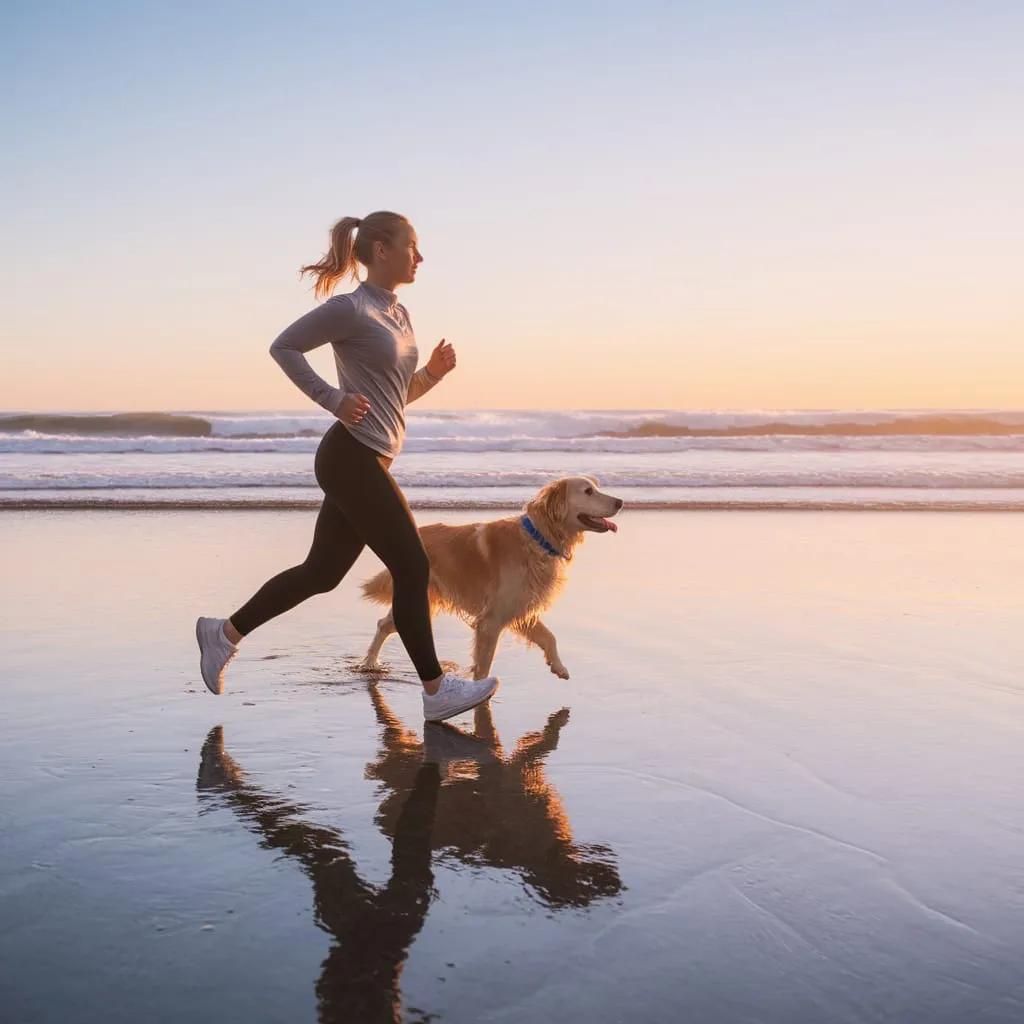
Dog Couch to 5K plan: build from walk-run intervals to a steady 5K with your dog over nine weeks.
Your dog would run with you every day if you asked. They're ready. They've been ready since you got them.
The question is whether you're ready.
Maybe you haven't run since school PE. Maybe you've tried before and quit. Maybe the thought of jogging around the block makes you feel slightly sick.
Here's the thing: having a dog waiting at the door is the best motivation you'll ever find. They don't care about your pace. They don't notice if you're struggling. They're just happy to be moving with you.
This programme adapts the classic Couch to 5K structure for dog owners. In nine weeks, you'll go from walking to running 5K with your dog beside you. No fitness required to start. No judgement. Just you, your dog, and a gradual build-up that actually works.
Can a dog run a 5K? Most healthy adult dogs can, but they need a gradual build-up, rest days and sensible weather choices. If your dog is still growing, overweight, lame, flat-faced or recovering from injury, speak to your vet before starting.
Yes, most healthy adult dogs can do Couch to 5K with their owner. Start with three short sessions a week, keep the running intervals slow, use rest days between runs and avoid warm weather. This dog-friendly plan keeps the classic nine-week structure but adds checks for paws, joints, hydration and lead manners. If you think of it as a dog Couch to 5K plan, the main difference from the standard programme is that you progress only when both you and your dog recover well.
If you searched for couch to 5k with dog, the safest route is simple: complete each week only when both you and your dog finish comfortably. If your dog is stiff the next day, repeat the week or add extra walking days before moving on.
If your goal is a 5K run with your dog, treat the plan as a slow build rather than a test of speed. Start with walk-run intervals, keep every run easy enough for your dog to trot beside you, and move up a week only when both of you recover well.
Most healthy adult dogs can handle far more exercise than a beginner running programme will ask of them. If your dog:
...they're ready.
If you're unsure, especially with older dogs or breeds prone to joint problems, a quick vet check gives peace of mind.
Not ready for running: Puppies under 12 months, dogs with arthritis or joint conditions, brachycephalic breeds (bulldogs, pugs) who struggle with breathing, dogs recovering from injury.
Essential:
Optional but helpful:
Rule 1: Temperature matters. Dogs overheat easily. Don't run if it's above 14-15°C. In the UK, that typically means morning or evening runs in spring/autumn, and avoiding summer midday entirely.
Rule 2: Start on flat, soft surfaces. Grass and dirt paths are easier on joints than pavement. Save the challenging terrain for later.
Rule 3: Hydration breaks are compulsory. Bring water, offer it during walking intervals, and watch for heavy panting.
Rule 4: Your dog sets the pace. If they're lagging, you're going too fast or too far. If they're pulling ahead constantly, let them - you'll catch up.
Use three sessions a week with a rest day between each run. Begin every session with a 5-minute warm-up walk, then alternate gentle running intervals with walking until both of you finish comfortably.
Keep the pace slow enough that your dog can trot beside you on a loose lead. Repeat a week if either of you struggles, and stop the plan if your dog is lame, stiff or unusually flat the next day.
This programme follows the classic Couch to 5K structure: alternating running and walking intervals, gradually increasing running time until you can run continuously.
Here is the shape of the plan before you start: Weeks 1 to 3 are mostly walk-run intervals, Weeks 4 to 6 build the first longer blocks, and Weeks 7 to 9 turn that base into a steady 30-minute run. Keep every run easy enough that your dog can trot beside you without heavy pulling or lagging behind.
Run three times per week with at least one rest day between sessions. The days don't matter - whatever fits your schedule.
Session 1, 2, 3:
Total time: 25 minutes per session
What to focus on: Just moving. Don't worry about speed or form. Keep the running intervals slow - barely faster than walking is fine. Let your dog figure out the rhythm.
Session 1, 2, 3:
Total time: 26 minutes per session
What to focus on: Your breathing. Try to breathe steadily and rhythmically. If you can't talk in short sentences, you're going too fast.
Session 1, 2, 3:
Total time: 28 minutes per session
What to focus on: The three-minute runs. They're the first real test. Your dog will barely notice, but you might. Keep it slow.
Session 1, 2, 3:
Total time: 31 minutes per session
What to focus on: The five-minute runs. This is where many people find their stride - long enough to settle into a rhythm.
Week 5 is different each session. By the end, you'll run 20 minutes without stopping.
Session 1:
Session 2:
Session 3:
What to focus on: Session 3 is the breakthrough. Twenty minutes of continuous running. It sounds impossible in Week 1. By Week 5, you're ready. Go slow, trust the programme.
Session 1:
Session 2:
Session 3:
What to focus on: After Week 5's 20-minute run, this week feels gentler. The 25-minute run at the end builds on what you've done.
Session 1, 2, 3:
Total time: 35 minutes per session
What to focus on: Consistency. Three 25-minute runs this week. You're a runner now, whether you feel like one or not.
Session 1, 2, 3:
Total time: 38 minutes per session
What to focus on: Enjoy it. By now your dog has learned the rhythm. They know when you're about to start running, when you'll stop. You're a team.
Session 1, 2, 3:
Total time: 40 minutes per session
What to focus on: Finishing what you started. Thirty minutes of running covers roughly 5K at a beginner pace. You've done it.
Pick a cool day and keep the first 5K relaxed. Avoid tarmac in warm weather, carry water for both of you, and choose a familiar park path, pavement loop or towpath so your dog is not coping with distance and a new environment at the same time.
Muddy winter ground, warm summer evenings and busy routes all change how hard the run feels for your dog. If you already use a dog activity monitor, use it for tracking your dog's recovery after longer sessions, and skip crowded events until your dog is settled running near other people and dogs.
For a Parkrun or informal 5K attempt, run at your dog's pace rather than chasing your own time. Avoid crowded starts, carry water, use a lead where the event or route requires it, and stop if your dog changes gait, lags behind or loses enthusiasm.
Some pulling is fine - dogs naturally want to be slightly ahead. If it's uncomfortable:
This is normal, especially early on. Options:
The programme is a guide, not a rule. If a week is too hard:
There's no failure in taking longer than nine weeks. Plenty of people take 12 or 15 weeks. The only failure is stopping completely.
Signs of overdoing it:
If this happens, take extra rest days and reduce your next session intensity. Dogs can strain muscles just like humans.
UK running means rain. A bit of drizzle is fine - dogs don't mind, and you'll dry. Heavy rain or thunderstorms? Skip it. Ice? Definitely skip it - the injury risk isn't worth it.
Summer heat is more problematic. If it's warm, run early morning (before 7am) or after sunset.
You've graduated. You can run 5K with your dog. Now what?
The simplest option: keep doing three 30-minute runs per week. Maintain your fitness and enjoy the routine you've built.
Build towards 10K using the same principle - gradual increases. Add 10% to your distance each week maximum.
Once you can comfortably run 5K, you can start working on pace. Add one "tempo" run per week - slightly faster than comfortable for a shorter distance.
Once your dog Couch to 5K plan feels comfortable, canicross is the natural next step if your dog enjoys running out front in harness. If you've enjoyed running with your dog, canicross is the natural next step. It's running with your dog attached to you via proper harness and line. Your dog actually helps pull you along, and there's a whole community of events and clubs to join.
Parkrun is free, happens every Saturday at 9am, and welcomes dogs at many locations. Check which Parkruns near you allow dogs and give it a go. Running with others is surprisingly motivating.
A dog Couch to 5K plan is the normal beginner walk-run programme adapted for running with your dog. It keeps the nine-week build-up but adds dog readiness checks, rest days, paw checks, water breaks and warm weather rules.
Most healthy adult dogs can run a 5K if they build up gradually with rest days, paw checks and sensible weather choices. Puppies, lame dogs, overweight dogs, flat-faced breeds and dogs recovering from injury need more caution, so speak to your vet before starting.
Run three times a week, with at least one rest day between sessions. On rest days, normal walks are fine. Avoid stacking hard runs, flyball training and long hikes back to back, because tired paws and sore muscles are easy to miss until the next morning.
Can any dog do Couch to 5K?
Most healthy adult dogs can comfortably run 5K. Some breeds handle distance better than others - collies, labs, spaniels are naturals. Brachycephalic breeds (flat-faced dogs like pugs and bulldogs) struggle with breathing during exercise and aren't suited to running.
How old should my dog be?
Wait until growth plates have closed - typically 12-18 months depending on size. Larger breeds take longer to mature. A puppy's joints can be damaged by repetitive running before they're fully developed.
What if I'm already a runner?
Skip ahead to wherever feels appropriate. The programme is designed for complete beginners. If you can already run 10 minutes comfortably, start at Week 4 or 5.
Can I run every day?
Not recommended, especially starting out. Rest days let muscles recover and adapt. Three times per week with rest days between is sustainable long-term.
What speed should I run?
Slow. Slower than you think. The "conversational pace" test: you should be able to speak in short sentences. If you're gasping, slow down.
Should I run with my dog on or off lead?
On lead for safety, especially near roads or in areas with livestock. A hands-free lead gives you both more freedom than a regular lead.
Use three short walk-run sessions a week with rest days between them. Build up slowly over nine weeks, keep the pace easy, avoid warm weather and repeat a week if your dog is stiff, sore or reluctant the next day.
Nine weeks from now, you could be running 5K with your dog. Not shuffling, not struggling - actually running.
Your dog is ready whenever you are. They'll match your pace on good days and drag you along on bad ones. They don't know you're doing something difficult. To them, it's just the best walk ever.
Week 1, Session 1: a 5-minute walk, then 60 seconds of running.
That's all you need to do today.
This post contains affiliate links. If you purchase through these links, we may earn a small commission at no extra cost to you. This helps support Flyball Hub.