
•Dalton Walsh
FOWC 2026 was held at Norfolk Showground on 30 and 31 May 2026. Check the venue, race format and club lessons from the Flyball Open World Cup.
By Dalton Walsh
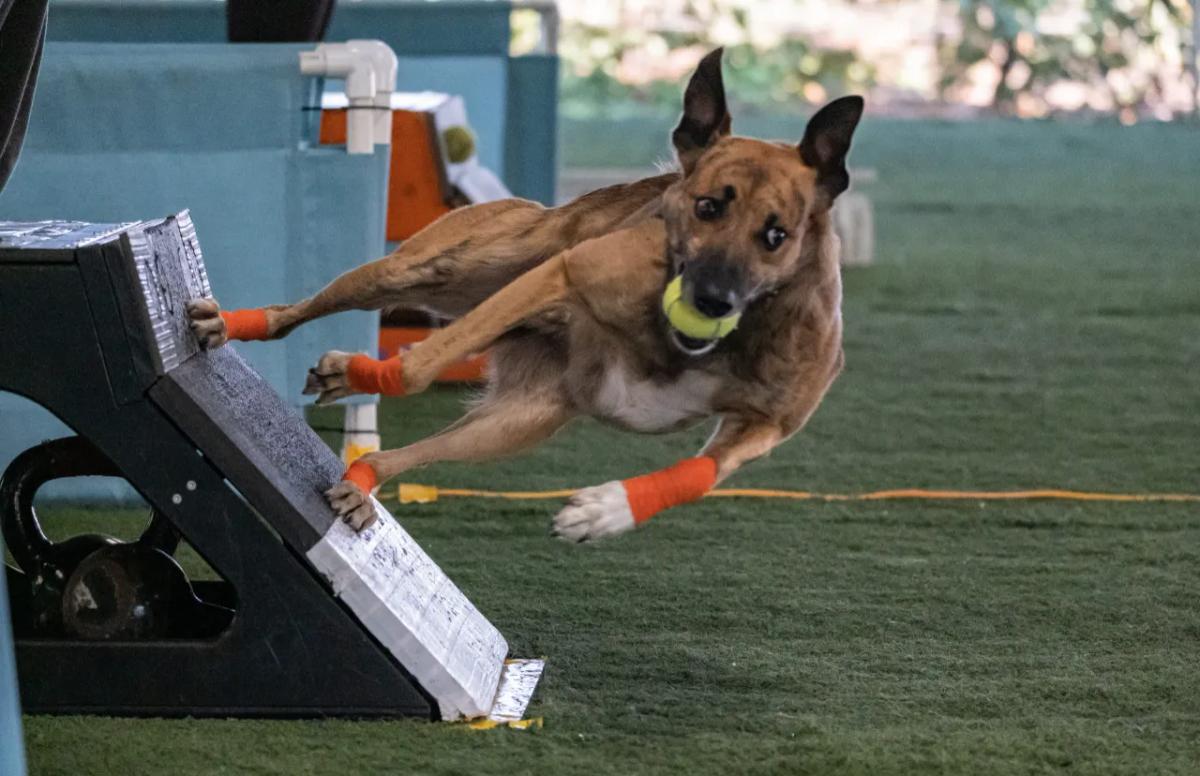
FOWC 2026 was the Flyball Open World Cup held at Norfolk Showground on 30 and 31 May 2026.
This independent guide covers the venue, race format, international field and practical lessons for club teams.
Flyball World Cup 2026 searches usually refer to this FOWC 2026 event.
Official information: For organiser updates and archived event information, visit the official FOWC 2026 website. Flyball Hub covers event context and club lessons, not official results.
That is a serious test of dogs, handlers, box loaders, line callers and team managers. I love events like this because they make all the quiet training work visible. Passing practice, box fixing, warm-ups, ring routines, dog welfare and admin suddenly matter as much as raw speed.
If you are newer to the sport, start with our what is flyball guide. If you already know the basics, the World Cup is a useful reminder that top-level flyball is built from very ordinary habits done well.
FOWC 2026 was held in the UK at Norfolk Showground, just outside Norwich. The official site described the venue as having space for camping, racing and socialising in one place, which matters more than people realise. A tired handler and an unsettled dog can lose as much time as a bad pass.
The team list also made it feel like a proper international weekend. The official FOWC team list included teams from the United Kingdom, Austria, Belgium, Canada, Czech Republic, France, Germany and Poland. UK entries included names familiar to many domestic competitors, alongside European and Canadian teams that bring different racing habits and pressure.
The racing format was also interesting. The official tournament page said Saturday group stages were planned as 15 groups of 5, with four races of three heats. Sunday moved into a Championship double-elimination division. That shape rewards consistency. You cannot treat the first day as a warm-up if it decides where you land on Sunday.
For club teams, that is probably the first lesson. Big events are not won only by the fastest four dogs in perfect conditions. They are won by squads that can keep running clean when the day is long and the ring is busy.

A tournament like this punishes vague planning. You need to know who is running, who is loading, who is watching changeovers, who is taking dogs out to toilet and who is keeping an eye on the running order.
That sounds obvious. It is also where small cracks appear.
At a normal weekend show, you can often get away with a bit of improvising. At a packed international event, you need boring systems. I mean that as a compliment. The best teams often look almost dull behind the scenes because everyone knows the routine.
If your club wants to learn from FOWC, start with your own training nights. Write down your roles for each run. Rotate people through box loading, line calling and warm-up handling. Make the non-racing jobs feel normal, not like something you remember five minutes before your division starts.
Our guide to planning a calm flyball training session is a good place to tighten that up. Calm is not the opposite of competitive. Calm is how you get competitive dogs to keep thinking.
The FOWC format used group racing before the knockout stage. That means every heat can shape the weekend. A messy early run is not always fatal, but it can change your Sunday.
This is where clean racing becomes more valuable than heroic racing. A team running slightly under its best time, but staying clean, can be far more useful than a team chasing a number it can only hit once every five runs.
That applies at club level too. If your team is always trying to run its fastest possible line-up, try building a second target: the line-up that can run clean three times in a row when everyone is tired.
I would rather take a slightly steadier team into a big event if the dogs know their jobs, the handlers trust the order and the box loader can repeat the same setup every time. Speed is fun. Repeatable speed is what survives a long weekend.
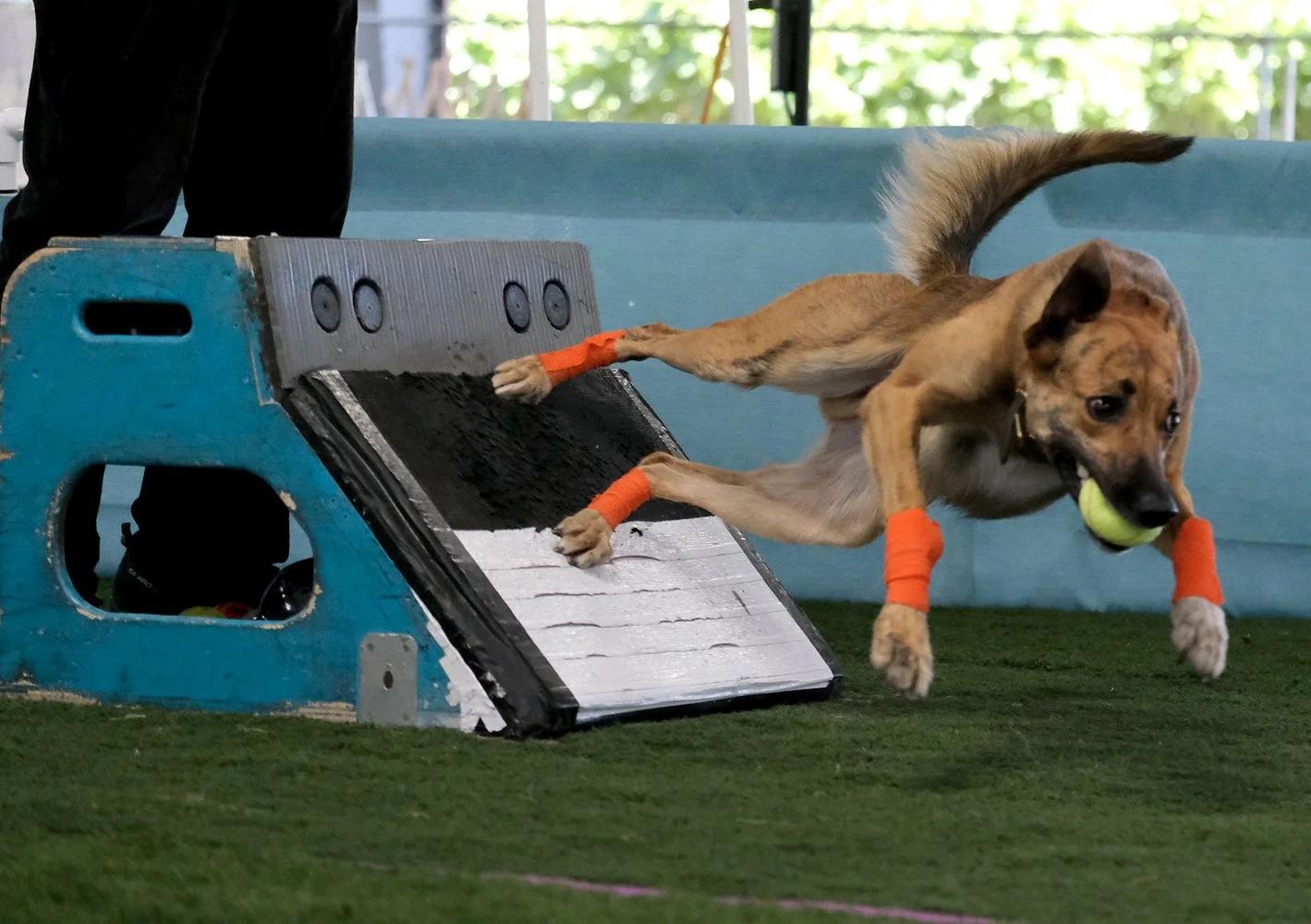
One detail from the official tournament page stood out: FOWC 2026 used the European method of fixing flyball boxes to the ground. The organisers noted that boxes had to be adapted to work with the system.
That is not glamorous, but it is the kind of thing that decides whether your team feels settled. Dogs notice when the box feels different. Box loaders notice when setup takes longer. Handlers notice when the team is already a bit tense before the dog even runs.
For most club teams, the takeaway is not to copy the exact FOWC system. It is to stop treating equipment as an afterthought.
Have a pre-event kit check. Look at your box surface, matting, balls, spare straps, first aid kit, shade, water bowls and crate setup. If something is half broken at training, it will feel twice as annoying at a big event.
For long summer weekends, I would also pack more comfort kit than you think you need. A decent cool mat, portable water bowl, crate fan and shade shelter can make the day easier for the dog and the humans.
The FOWC tournament page said jump heights were measured under FCI regulations using ulna measurement, while racing on inch-based jump heights for the event. That is a small sentence with a lot behind it.
Different organisations measure dogs differently. UKFL, BFA, FCI, NAFA and AFA rules do not all feel identical in practice. Most handlers do not need to memorise every table, but team managers should know what measurement method applies before entering a major event.
That affects which dog sets the jumps, how you plan your line-up and whether your usual height dog gives you the same benefit under that event's rules.
If your club travels between organisations, make a simple cheat sheet for your own dogs. Keep each dog's normal racing role, measurement details and any rule-specific notes in one place. It saves a lot of guesswork when entries open.
This is exactly the sort of admin Flyball Hub should help teams track over time. Not because spreadsheets are exciting. Because fewer surprises means better racing.
Most teams are not going to the Flyball Open World Cup. That does not mean the weekend has nothing to teach them.
Here is what I would copy from the top end of the sport.
Practise event routines, not just dog skills. Run a mock race order at training. Call dogs to the ring, warm up, race, reset and cool down like it is a real day.
Build depth in your squad. If only one person can box load for a dog, or only one handler can run a certain position, your team is fragile. Big events expose that quickly.
Train recovery. Dogs need to learn how to switch off near noise, crates and other dogs. That is a skill. You can work on it in tiny chunks before you ever enter a huge show.
Record what actually happens. After a tournament, write down what worked, what felt messy and what you want to change next time. Do it while everyone still remembers the details.
If you are preparing for your own first big show, our flyball training guide covers the calmer, practical side of the sport.
From a Flyball Hub point of view, we should have had a preview live before the weekend. A simple spectator guide, team prep post or "what to watch at FOWC" article would have made sense.
The recovery plan is simple. Cover the lessons now, then build a habit around upcoming events. The UKFL Championships are listed for 24 to 27 July 2026 at Anglesey Showground, with Championship Cup, League, Pairs, Singles and junior formats on the schedule. That gives us time to publish a proper preview before entries and travel plans are front of mind.
The content angle should not be fake news or pretend reporting. Unless we have official results in front of us, we should not invent winners or timings. Better to write useful event context: format, prep, what teams should bring, what newer handlers should watch and how clubs can use the event to improve.
That is the kind of content that still helps after the weekend is over.
WK Flyball 2026 can refer to this FOWC 2026 event for people looking for world cup or world championship flyball information. The official event name was the Flyball Open World Cup 2026.
FOWC 2026 was the Flyball Open World Cup held at Norfolk Showground on 30 and 31 May 2026. It brought UK, European and Canadian teams together for group racing and Sunday double-elimination finals.
FOWC 2026 was the Flyball Open World Cup, an international flyball event held at Norfolk Showground on 30 and 31 May 2026. If you searched for flyball world championships, this is the event context and the club-team lessons from that weekend.
FOWC 2026 was a reminder that flyball is getting more polished, more international and more serious without losing the club feel that makes it fun. The dogs still do the loud, brilliant bit. The humans still spend half the weekend carrying crates, checking running orders and trying to remember where they put the leads.
For me, the useful lesson is not that every team needs to chase world-level racing. It is that world-level racing is made from habits any club can practise: clear roles, clean starts, settled dogs, good equipment and honest debriefs.
If your club wants to improve this season, pick one of those habits and work on it for a month. Not all of them. One. Then make it boringly reliable.
That is usually where the faster racing starts.