•Dalton Walsh
Considering BarkWell's Instinct Herding Ball? See how it works, which dogs it may suit, safety checks, and why it cannot replace a flyball ball.
By Dalton Walsh
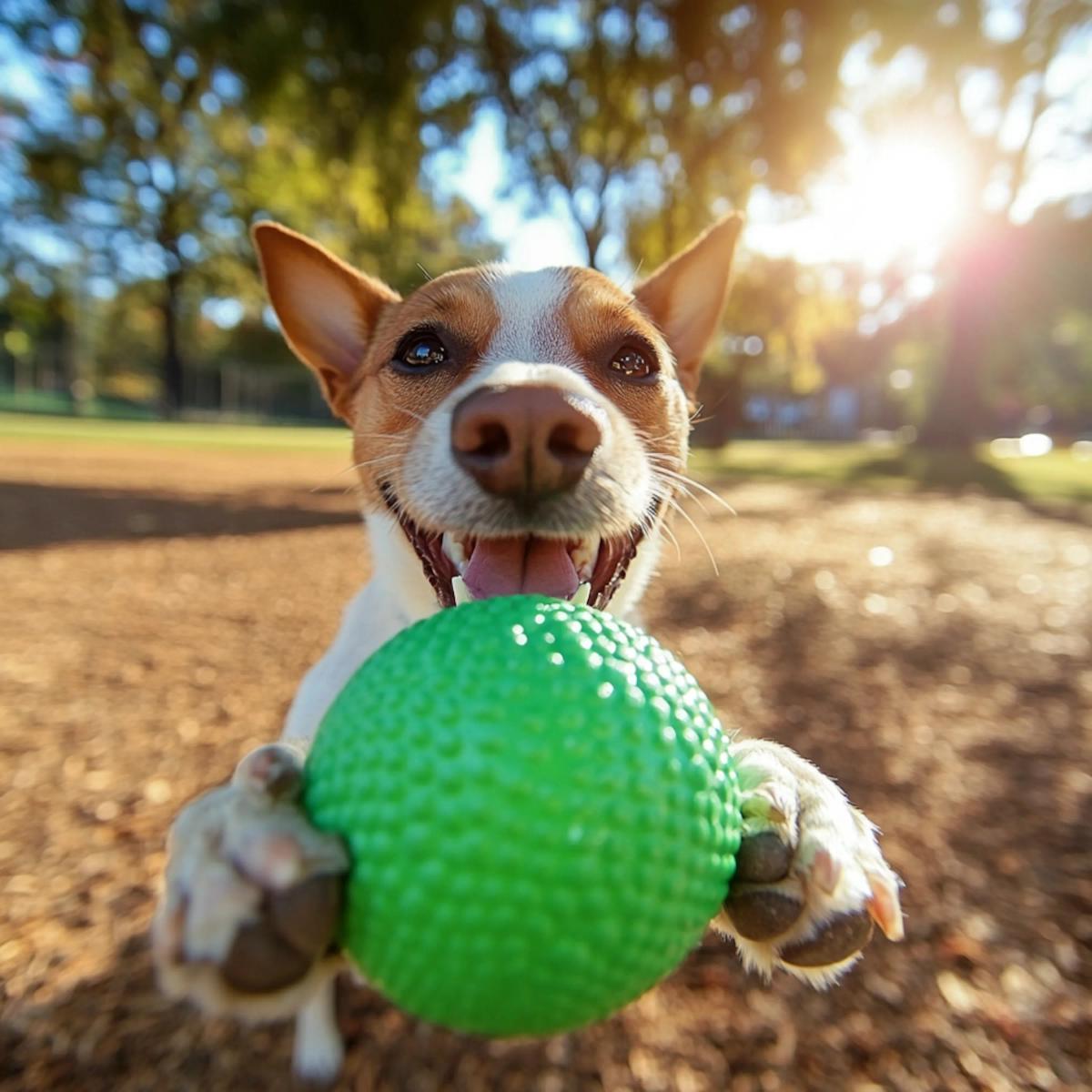
Ball drive in dogs means your dog genuinely wants the ball: to chase it, grab it, carry it and bring it back. In flyball, that matters because the ball is the reward waiting at the box, and the dog needs enough desire to turn, collect it and race home.
Put simply, a dog with ball drive sees the ball and thinks, I need that. That desire is what helps them sprint away from you, trigger the box, catch the ball, and race back without you having to beg for every step.
Some dogs arrive at their first session already ball-mad. Others need the game built carefully, especially if they prefer food, sniffing, or tug. The aim is not to force obsession. It is to make the ball feel valuable, exciting, and worth returning to you.
This guide keeps things beginner-friendly: what ball drive means, how to build it in short sessions, what to do when the dog chases but will not pick up, and when to ask a good club trainer for help.
Quick answer: ball drive is the desire to chase, grab and bring back a ball because the dog finds the ball rewarding. For flyball, you want enough ball drive for the dog to ignore the noise, hit the box, collect the ball and sprint back happily. If your dog only chases once or prefers food, you can often build more value with short games, movement and easy wins.
BarkWell currently calls the product the Instinct Herding Ball. Older search results may call it the Instinct Drive Ball. Both names refer to a large ball a dog chases and pushes rather than carries.
A BarkWell Instinct Herding Ball is intended for short chase-and-push games. It may help a dog that engages with a large moving target but ignores small balls, but it is not suitable for flyball box work because the dog cannot carry it back.
Flyball Hub is not the manufacturer. Choose a size your dog pushes rather than grips, follow BarkWell's current size and inflation instructions, and stop for collisions, fear, limping or loss of control.
| Ball type | Purpose | How the dog moves it | Can it be carried? | Best training stage | Main safety concern |
|---|---|---|---|---|---|
| BarkWell Instinct Herding Ball | Chase confidence and pushing games | Chases and pushes | No | Short confidence work before retrieves | Frantic biting, collisions and poor footing |
| Normal fetch ball | Build chase, pickup and return | Chases, picks up and carries | Yes | Early retrieve games | Swallowing, damaged balls or overuse |
| Flyball box ball | Box turn, pickup and race return | Triggers, catches and carries | Yes | Structured flyball training | Poorly fitted ball, rushed box work or hard landings |
It can suit dogs that enjoy chasing large moving objects or ignore small balls but still light up for a rolling target. Skip it, or get help from your club trainer, if your dog becomes worried or over-aroused around large toys.
Before you start, choose a size your dog pushes rather than grips. Use enough clear space, a grippy surface and active supervision, then follow BarkWell's current size, inflation and inspection instructions. Stop for frantic biting, collisions, fear, limping or loss of control.
Flyball needs a dog to collect and return a ball, but the ball does not have to be the dog's only reward. Plenty of dogs race back for tug, food or the chance to run again.
The important part is a confident pickup and a fast return. Your dog needs to trigger the box, collect the ball cleanly and race home through noise, movement and dogs in the other lane.
If the ball itself is not yet valuable, build the retrieve in tiny steps and use the reward your dog already loves. The goal is a dog who understands the job and enjoys the run, not a dog pushed into obsession.
The good news is that almost any breed can do flyball as long as they've got the drive for it.
Before you start trying to build something, it helps to know where you're starting from.
Strong ball drive looks like:
Eyes locked on the ball the moment you pick it up
Body tense, ready to explode
Whining or barking in anticipation
Chasing after it the instant you throw
Bringing it back immediately (or at least trying to)
Wanting to go again before you've even caught your breath
Low ball drive looks like:
Casual interest that fades quickly
Chasing once or twice then losing interest
Picking up the ball but not returning it
Preferring to sniff around instead
More interested in treats than toys
Looking at you like you're a bit odd for throwing things
If your dog falls into the second category, don't panic. Plenty of successful flyball dogs started out indifferent to balls.
Think of ball drive as a ladder. Do not jump straight to full retrieves if your dog barely notices the ball. Start with tiny wins, build value, and only add difficulty when the dog is still keen.
Safety note: keep ball drive sessions brief and stop while your dog still wants more. Avoid frantic chasing on slippery ground, do not let a big drive ball turn into repeated hard collisions, and ask a club trainer for help if your dog gets so wound up around balls that they cannot listen.
Put everyday balls away. The training ball only appears for short, exciting sessions, then disappears while your dog still wants more. Scarcity is not a trick, it is how you stop the ball becoming background furniture.
A still ball is easy to ignore. Roll it away, bounce it once, drag it past your dog, or use a ball on a rope so it looks like something escaping. Movement wakes up the chase instinct before you ask for a proper retrieve.
A herding ball can help if your dog likes movement but does not yet care about picking up a tennis ball. BarkWell's Instinct Herding Ball fits this short chase-and-push stage, not box work.
Reward calm looking, chasing and pushing, then move back towards smaller balls, tug balls or a ball on a rope so the game starts to look more like flyball.
Do not use a large herding ball for box work or jump grids. It is too big for the flyball picture and can teach pushing with the feet or nose instead of a clean pickup and return.
At the start, reward looking at the ball, following it, touching it, or picking it up for half a second. If your dog is food-motivated, pay those tiny choices quickly. You are teaching them that interacting with the ball makes good things happen.
If your dog prefers tug, use that instead of fighting it. A tug toy with a ball attached can bridge the gap: tug is the game they already love, and the ball becomes part of that game.
Food can help too, especially for dogs who think toys are pointless. Let them touch or pick up the ball, then reward. Over time, ask for a little more before the food appears.
Start indoors or in a quiet garden. Roll the ball only a metre or two. If your dog turns back towards you with it, celebrate. Do not grab at the ball or make the return feel like a trap. Swap for a second ball, tug, or food so coming back pays well.
Once your dog can return the ball in an easy place, add one challenge at a time: a different room, a quiet outdoor space, one person watching, then a club environment. Jumping straight from kitchen games to flyball chaos is where many dogs lose confidence.
End while your dog is still asking for another go. For many beginners, two or three minutes is enough. A dog that finishes frustrated because the ball vanished will usually come back keener next time. A dog that finishes bored has learned the ball gets dull.
These work well for most dogs:
Get two identical balls. Throw one, and when your dog picks it up, show them the second ball excitedly. Most dogs will drop the first ball and run to you for the second one. Throw that one, then pick up the dropped ball. Repeat.
This teaches fast returns without you having to wrestle the ball away from your dog.
Have someone hold your dog while you show them the ball excitedly. Run away a short distance, then wave the ball and call them. The person releases your dog, and they sprint to you for the ball.
The restraint builds anticipation, and the release creates an explosion of energy towards you and the ball.
Let your dog see you hide the ball somewhere easy - behind a cushion, under a towel, just around a corner. Then encourage them to find it. Start easy and gradually make hiding spots harder.
This builds engagement with the ball and teaches your dog that finding the ball is rewarding.
While walking with your dog, "accidentally" drop the ball so it rolls away from you. Act surprised and excited. Most dogs will instinctively chase after a rolling ball, even if they normally wouldn't fetch one you threw.
For flyball, do not rush this stage: a dog that enjoys the chase but avoids the pickup needs the ball made easier, closer and more rewarding before you add speed or distance.
Make the pickup easier. Use a softer ball, roll it a shorter distance, and reward any mouth contact. Some dogs dislike hard or large balls, so experiment before assuming they lack drive.
Do not turn it into a chase game unless you want to teach keep-away. Use two identical balls, swap calmly, or run away from your dog so returning to you becomes the fun part.
That is not a disaster. Many flyball dogs are tug-mad. Use tug as the main reward while you build interest in the ball, then gradually ask for a ball pickup before the tug game starts.
The outdoor world is harder. Smells, movement, other dogs, and open space all compete with you. Go back a step: shorter throws, higher energy, fewer distractions, and a special ball that only appears outside.
High drive still needs control. Add simple impulse games, reward calm starts, and work with your club before adding box turns or fast lanes. Good ball drive should create speed without sacrificing safety.
There is no reliable timetable. Some dogs offer a pickup in the first session, while others need several weeks of short games before the ball starts to matter.
Track small changes rather than waiting for a perfect retrieve: a quicker chase, first mouth contact, one step back towards you, or choosing the ball around a mild distraction.
If progress stalls, change one thing at a time, such as the ball texture, throw distance, room or reward. Ask a club trainer to watch before deciding your dog cannot learn the flyball retrieve.
Building ball drive is as much about what you stop doing as what you start. Here are the most common mistakes handlers make.
Leaving the same balls lying around: some dogs lose interest when the training ball becomes part of the furniture. Keep one favourite ball for short games if that helps your dog stay keen.
Using food without a plan: food is a useful bridge. Reward a clear ball action, then gradually ask for a little more before the food appears.
Sessions that are too long: enthusiasm fades. Stop while the dog still wants more. Five minutes is often enough.
Forcing the dog to interact: shoving a ball in the dog's face builds avoidance, not drive. Let the dog choose to engage.
Ignoring breed tendencies: a terrier and a sighthound will not build ball drive the same way. Adapt your approach to your dog's genetics and personality.
Keep the sessions easy enough that your dog still wants another go next time.
Be patient. Judge progress by what your dog does today compared with the last few sessions, not by a fixed deadline.
Stay consistent. Ball training every other day beats an intense session once a fortnight. Regular short sessions build habits.
Match your energy. Boring handler, boring game. If you're not excited about the ball, why would your dog be?
Experiment with ball types. Some dogs prefer squeaky balls, others like fuzzy ones, some go mad for a specific colour. Find what gets the best reaction.
Don't punish mistakes. If your dog doesn't bring the ball back, don't get frustrated. Just end the session and try again later. Negative associations kill drive.
People often confuse ball drive with prey drive, but they are not the same thing. Understanding the difference helps you train more effectively.
Ball drive is object-focused: the dog wants the ball itself, to carry it, and to bring it back to you.
Prey drive is chase-focused: the dog wants to catch and sometimes shake or 'kill' a moving target.
In flyball, ball drive wins because the dog must return the object. Prey drive can cause the dog to run off with the ball or lose interest once the chase ends.
Many dogs have both. The best flyball dogs channel prey chase energy into ball retrieval, giving them explosive speed and a clean return.
Drive balls can make some dogs very intense. Use a flat, enclosed area, avoid slippery floors and stop before the dog gets frantic. For flyball dogs, you want controlled chase and a clear head, not a dog that slams into the ball until they are sore.
Keep sessions short. Two or three minutes is plenty for many dogs. If your dog is young, lame, recovering from injury or already doing hard flyball training, ask your club trainer or vet before adding more high-arousal chase work.
Setup checklist: match the ball size to your dog so they push it rather than swallow or carry it. Use a clear, enclosed area with good footing and no hard edges. Keep sessions short and stop for frantic biting, collisions, fear, limping or loss of control. Follow the maker's inflation and inspection instructions.
Ball drive means a dog has strong motivation to chase, catch, carry, and return a ball. In flyball, it is the reward system that makes the dog want to sprint to the box and come back fast.
You can often build it, especially in dogs that already enjoy chase, tug, or food games. You cannot force every dog to become ball-obsessed, but you can make the ball more valuable through short, positive sessions.
BarkWell currently sells it as the Instinct Herding Ball. It is a large herding-style ball for chase-and-push play, and older searches may call it the Instinct Drive Ball. It cannot replace the carryable ball used on a flyball box.
Use tug. It is much better to start with a reward your dog loves than to nag them about a ball they do not care about. Pair the tug with the ball, then slowly ask for a touch, pickup, or return before the tug reward.
No. Prey drive is mostly about chasing and catching movement. Ball drive is more specific: the dog wants the ball itself and will bring it back. Flyball needs that return piece, not just the chase.
Shorter than you think. Two to five minutes is plenty for many dogs, especially beginners. Stop while the dog still wants more.
Yes, as gentle play. Keep it low-impact, avoid repetitive hard chasing, and focus on fun little games rather than formal flyball work. For more detail, read the puppy flyball foundations guide.
Yes. A dog who cannot think around the ball may snatch, scream, ignore cues, or turn badly. The answer is not less training, it is better training: impulse control, calm releases, and safe foundations.
A herding ball can be a useful short bridge for a dog that loves movement but ignores smaller balls. Keep the game controlled, then return to a carryable ball and build the pickup and race back in easy steps.
If it works, you'll end up with a dog who lights up the moment they see a ball - exactly the kind of enthusiasm that makes flyball brilliant.
If it doesn't work after a genuine effort, that's fine too. Not every dog is meant for flyball, and there's a sport out there that will suit your dog perfectly. The most important thing is finding something you both enjoy.
Once you start training, log each session in Flyball Hub so you can compare the ball, reward, distance and return quality that worked for your dog.
Ready to get started? Find a local flyball club and chat to them about training options. Most clubs are happy to help you assess whether your dog has the potential, and they've probably got plenty of ball drive tips from years of experience.
This post contains affiliate links. If you purchase through these links, we may earn a small commission at no extra cost to you. This helps support Flyball Hub.