•Dalton Walsh
Best dog sports for high-energy dogs, from flyball and agility to canicross, scentwork and hoopers. Find the right way to tire out your energetic dog.
By Dalton Walsh
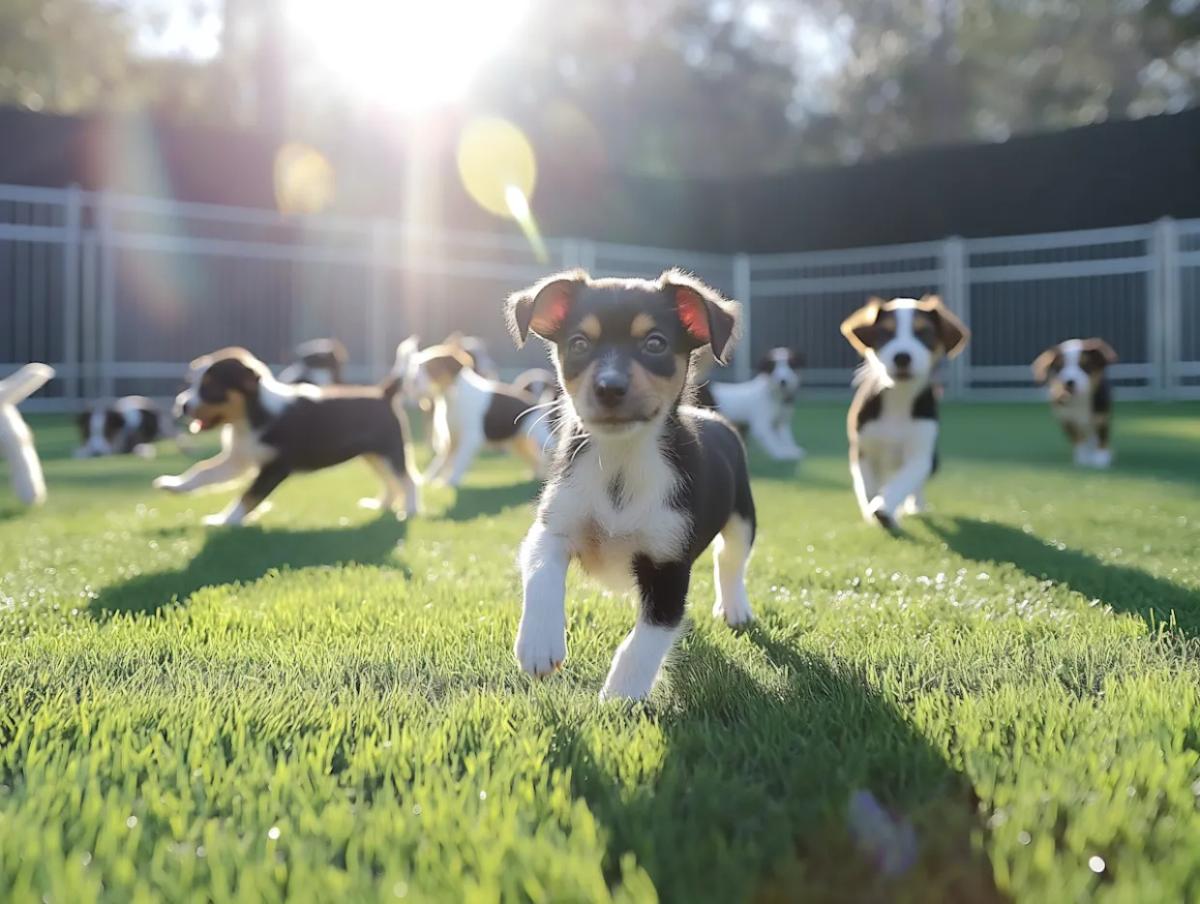
You've got a dog who could run laps around the garden for hours and still want more. The morning walk barely takes the edge off. By evening, they're bouncing off the walls while you're exhausted just watching them.
Sound familiar?
High-energy dogs need more than a daily walk around the block. They need a job. Something that engages their brain and body. Something that makes them actually tired rather than just briefly occupied.
That's where dog sports come in. There are organised activities for nearly every type of energetic dog, from team flyball lanes to quiet scentwork searches. In the UK, you can usually find at least one beginner-friendly option within driving distance.
A 20-minute training session can tire a dog out more than an hour-long walk. That's because dog sports combine physical exercise with mental work - learning rules, responding to cues, making decisions. It's the mental engagement that really drains the battery.
Beyond the tiredness factor, dog sports give your dog a purpose. Dogs bred for work - collies, spaniels, terriers - often become destructive or anxious when they've got nothing to do. Channelling that energy into a structured activity gives them an outlet they were literally born for.
And there's something in it for you too. You'll meet people, learn new skills, and build a closer bond with your dog. Most handlers describe their sport as a lifestyle, not a hobby.
Here's a rundown of the best options.
People say 'high energy' but that phrase covers a lot of ground. Some dogs are physically restless: they pace, they dig, they chew furniture. Others are mentally intense: they problem-solve, they watch everything, they need a job to feel calm. Most high-energy dogs are a mix of both.
Signs your dog has excess energy that needs channelling:
If that list sounds like your dog, the issue is not bad behaviour. It is unspent energy. Walks help, but they rarely drain the tank completely. A dog with serious energy reserves needs structured, repetitive physical work combined with mental focus. That is exactly what dog sports provide. If you are not ready for a sport yet, there are other ways to tire out your dog when walks aren't enough.
Before you pick a sport, be honest about your dog's energy pattern. A dog that needs to run for miles will suit canicross or flyball. A dog that needs mental puzzles will suit scentwork or agility. Match the sport to the type of energy, not just the quantity.
If you only have five minutes, use this as the shortcut. The best sport is not always the hardest or fastest one. It is the one that matches the way your dog burns energy.
For sprinty, toy-mad dogs: try flyball or disc dog first.
For dogs with stamina: look at canicross, especially through cooler months.
For clever dogs who never switch off: scentwork and agility often do more than another long walk.
For young, older or joint-conscious dogs: hoopers and scentwork are safer starting points than repeated jumping.
For a flyball dog, I would also check ball drive, recall and basic fitness before worrying about race speed. These guides help: building ball drive, recall training and flyball health basics.
Best for: Ball-obsessed dogs, social handlers, people who want a community
Flyball is a relay race. Four dogs take turns sprinting down a lane of hurdles, triggering a box that fires out a tennis ball, catching the ball, and racing back. First team home wins.
What makes flyball different from most dog sports is that it's a team activity. You're not competing alone - you're part of a club, training together weekly, travelling to competitions together, often camping together at weekend tournaments. The social side is as big a draw as the racing itself.
For high-energy dogs, flyball is perfect. It's fast, it's exciting, and the short bursts of intense activity are exactly what most energetic dogs need. A typical competition involves dozens of 20-second heats across a weekend. Even small dogs can shine - teams actively recruit height dogs because they lower the jump height for everyone.
The catch: Your dog needs to love balls. Really love them. If they couldn't care less about chasing a tennis ball, flyball isn't going to work - though ball drive can be built in many dogs.
Getting started: Find a flyball team near you. Most clubs run beginner courses.
Best for: Handler-focused dogs, people who want a technical challenge, those who prefer local competition
Agility is the most popular dog sport in the UK. Your dog navigates an obstacle course - jumps, tunnels, weave poles, A-frames, seesaws - following your verbal cues and body language. Every course is different, set by the judge on the day.
For high-energy dogs, agility provides both physical exercise and intense mental focus. Your dog has to pay attention to you constantly, making split-second decisions about which way to go.
The downside compared to flyball is that it's an individual sport. You turn up, run your dog, go home. There's less of the built-in community that comes with team sports. Some people prefer it that way - less commitment, more flexibility.
The catch: Your dog needs to focus on you despite distractions. A dog that's constantly looking at other dogs or sniffing around will struggle in agility. A solid recall is the foundation.
Getting started: Search for agility clubs in your area. There are more agility clubs than any other dog sport in the UK.
Best for: Active handlers, dogs who love to run, people who want to combine their own fitness with their dog's
Canicross is cross-country running with your dog attached to you via a harness, line, and belt. Your dog runs in front, pulling slightly, while you run behind. It originated in Scandinavia as off-season training for sled dogs.
For high-energy dogs that need to cover distance, canicross is ideal. You can go for miles, and the pulling work gives them a job to do rather than just running alongside you.
You don't need to be a marathon runner to start. Many clubs welcome complete beginners, and there are events at various distances. The UK canicross season runs mainly through autumn and winter - it's too hot for dogs in summer.
The catch: You need to be reasonably fit yourself. If running isn't your thing, this probably isn't your sport.
What you'll need: A hands-free running belt, bungee line, and proper pulling harness. Regular leads and collars don't work - you need gear designed for the sport.
Getting started: Look for Canicross UK clubs or local running groups that include dogs.
Best for: Any dog (all breeds, all ages), reactive or anxious dogs, less mobile handlers
Scentwork is the thinking dog's sport. Your dog searches for a specific scent - typically clove, gun oil, or truffle oil - hidden in containers, rooms, or outdoor areas. It's competitive hide and seek.
Here's the thing about scentwork: it doesn't look tiring, but it absolutely is. Ten minutes of focused searching can exhaust a dog as much as an hour of running. The mental effort of processing scent information and making decisions drains their energy.
Scentwork redirects intensity. Instead of bouncing around, they learn to channel that energy into focused, methodical searching. Many handlers report that their previously chaotic dogs become calmer after starting scentwork.
It's also one of the most accessible sports. Your dog doesn't need to be fast, athletic, or particularly obedient. They don't need to interact with other dogs. They just need a nose - which every dog has.
The catch: If you want physical exhaustion, scentwork won't provide it. The tiredness is mental.
Getting started: You can begin at home with treat-finding games or a snuffle mat. For formal training with competition scents, look for Scentwork UK instructors or UK Sniffer Dogs classes. A scentwork starter kit can help you practice at home.
Best for: Dogs who can't do high-impact jumping, handlers who can't run, puppies and older dogs
Hoopers is agility's gentler cousin. Instead of jumps, dogs run through hoops, around barrels, and through tunnels. The courses flow at ground level with no sudden stops or sharp turns.
The key difference from agility is that you direct your dog from a distance rather than running alongside them. You stand in a handling zone while your dog navigates the course independently based on your verbal cues and hand signals. That makes it perfect for handlers with mobility issues.
For high-energy dogs, hoopers might seem too gentle - but don't underestimate it. The courses are long and flowing, and dogs work up a good speed. The mental challenge of reading your signals from a distance is genuinely tiring.
Hoopers is also one of the few sports with no real age restrictions. Puppies can start training (gently) before their growth plates close, and elderly dogs can keep competing long after they'd need to retire from agility.
The catch: Less adrenaline than flyball or agility. If your dog lives for intense bursts of speed, hoopers might not hit the spot.
Getting started: Canine Hoopers UK runs classes and competitions across the country.
Best for: Dogs who love to catch, athletic handlers, people wanting to practice anywhere
Disc dog (don't call it frisbee - that's a trademark) is exactly what it sounds like: competitive disc throwing and catching. There are distance events (how far can your dog catch?) and freestyle events (choreographed routines with multiple discs).
For high-energy dogs that love to chase and catch, disc dog is a natural fit. The jumping, sprinting, and mid-air catches provide serious physical exercise. And unlike many sports, you can practice in any open space - you don't need special equipment or a training venue.
The UK disc dog scene is smaller than agility or flyball. The UK Disc Dog Association runs events, and there are pockets of activity, but you might need to travel for competitions.
The catch: High-impact jumping can be hard on joints. Not ideal for dogs with any structural issues.
What you'll need: Proper dog discs - not regular frisbees, which can injure dogs' mouths. Look for soft, flexible discs designed for catching.
Getting started: Look for UK Disc Dog Association events or the Disc Dogs UK community on Facebook.
Best for: Water-obsessed dogs, retrievers and spaniels, dogs who need joint-friendly exercise
Dock diving is simple: your dog runs down a dock and jumps into a pool, usually chasing a toy. They're judged on distance (how far they jump) or height (how high they go at the peak of their jump).
For water-loving high-energy dogs, this is heaven. The explosive sprint and leap provides intensity, while the water landing is easy on joints. It's one of the few high-energy sports that vets actually recommend for dogs with joint concerns.
The UK dock diving scene has grown steadily. There are dedicated facilities including Dock Diving UK, Jump In Dog Therapy Pool, K9 Aqua Sports, and Canine Dip and Dive Club. Some general dog pools also offer dock diving sessions.
The catch: You need access to a dock diving facility. This isn't something you can practice at your local pond.
Getting started: Search for dock diving or canine aquatics centres near you. Many offer taster sessions.
With so many options, how do you pick?
Start with your dog:
Then consider yourself:
Practical factors:
The honest answer is: try a few things. Most clubs offer taster sessions. Your dog will probably tell you which one they prefer.
If I had a young, busy dog and no sport yet, I would book one taster session before buying much kit. You learn more from watching your dog in a real class than from another week of guessing at home.
Start with flyball if your dog lights up for tennis balls and you like the idea of a team. Use the team finder to see who trains near you, then ask whether they run beginner sessions or foundation classes.
Start with agility if your dog naturally checks in with you and you want a technical challenge. Start with hoopers if you want that handling puzzle without the same jumping load.
Start with canicross if both of you need miles, but keep it seasonal and sensible in warm weather. If you are still building fitness, couch to 5K with your dog is an easier first step.
Start with scentwork if your dog is reactive, older, recovering confidence or mentally noisy. It is not flashy, but I have seen sniffing work settle dogs that could run all day and still come home wired.
Absolutely. Many dogs compete in two or three sports.
One thing to know: some sports teach habits that conflict with others. Flyball trains dogs to jump flat and fast, which isn't ideal technique for agility jumps. Dogs that do both sometimes need separate practice on jumping style.
But most dogs adapt. They learn that flyball rules apply at flyball and agility rules apply at agility. Dogs are smarter than we give them credit for.
High-energy and anxious often go together. If your dog struggles around other dogs, some sports work better than others:
Good options:
Harder options:
Whatever sport you choose, tell the club about your dog's needs upfront. Good clubs will work with you.
What's the best sport for a high-energy dog?
It depends on your dog's specific interests. Ball-obsessed dogs thrive in flyball. Dogs that love to run suit canicross. Water lovers excel at dock diving. If you want maximum tiredness with minimum physical impact, try scentwork - the mental effort is exhausting.
How do I find dog sport clubs near me?
Search "[sport name] + [your area]" or check governing body websites. For flyball, try our team finder. For agility, the Kennel Club has a club finder. For other sports, the national organisations (Scentwork UK, Canicross UK, Canine Hoopers UK) list affiliated instructors.
Can any dog do dog sports?
Most healthy dogs can do at least one sport. Some sports (flyball, agility) need specific drives - ball obsession or handler focus. Others (scentwork, hoopers) work for almost any dog regardless of breed, age, or training history.
What age can dogs start dog sports?
Foundation training (no jumping) can start from around 12 weeks. Full training with jumping usually starts at 12-18 months, depending on breed size. See our guide on when puppies can start flyball for more detail on growth plate concerns.
Are dog sports expensive?
Beginner courses typically cost £100-150 for 6-8 weeks. Ongoing training is usually £5-10 per session. Competition entry fees vary by sport but are generally £10-30 per event. The main cost is usually travel and accommodation for weekend competitions.
A tired dog is a happy dog - and a happy owner. High-energy dogs need an outlet, and dog sports provide exactly that: structured physical and mental work that leaves them genuinely satisfied.
The UK has options for every type of dog and handler. Something will suit.
Your first step is simple: find a local club and go watch a training session. Most will let you bring your dog for a taster. You'll know pretty quickly whether it clicks.
Ready to try flyball? Find a team near you or read our complete beginner's guide.
Flyball is easier when you can track the little foundations: recall, ball drive, fitness notes, box confidence and what your club suggested last session. That is exactly the sort of thing Flyball Hub is built for. You can keep dog profiles, training notes and team details in one place instead of trying to remember everything after a noisy evening at training.
If you are still at the browsing stage, start with learn flyball and then find a team near you. A good club will tell you quickly whether flyball is the right outlet for your dog or whether another sport would be kinder.
This post contains affiliate links. If you purchase through these links, we may earn a small commission at no extra cost to you. This helps support Flyball Hub.
If agility sounds useful but you are not ready for classes, start tiny at home. A safe garden agility setup can give a high-energy dog short thinking reps without turning the lawn into a full course.