•Dalton Walsh
If your dog lunges, barks, or struggles around other dogs, a muzzle might help. Here's how to choose one, train it properly, and use it without shame.
By Dalton Walsh
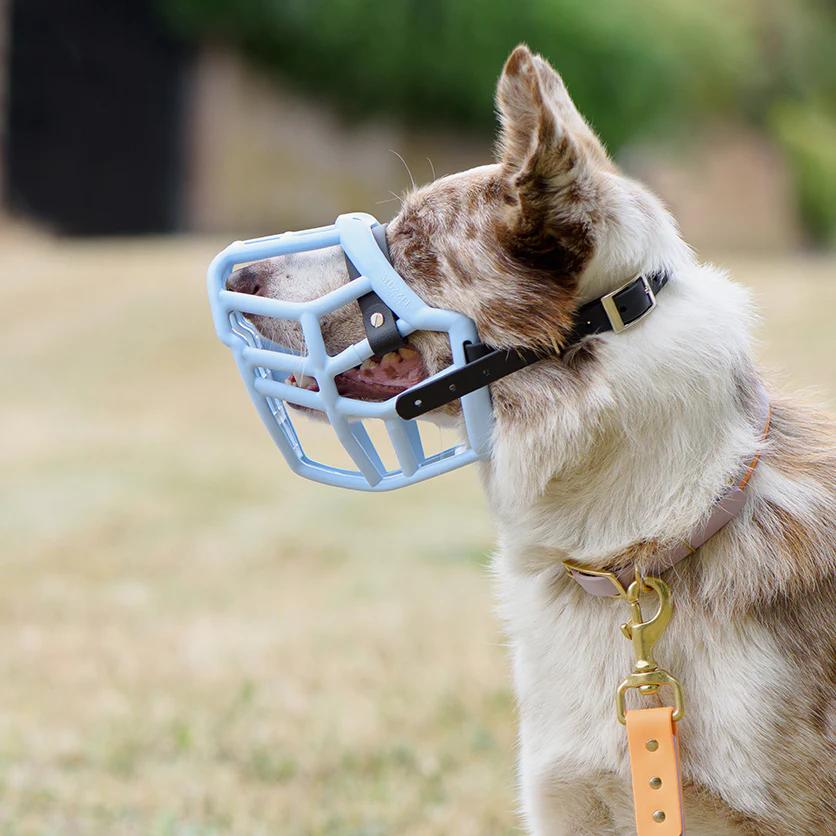
If you've ever crossed the street to avoid another dog, held your breath at the vet, or apologised to strangers because your dog lost it on the lead, you already know what reactivity feels like. It's exhausting. And somewhere along the way, someone probably suggested a muzzle.
Maybe you dismissed it. Muzzles are for dangerous dogs, right? For biters? The thought of putting one on your dog feels like admitting defeat, or worse, like labelling them as something they're not.
Here's the thing: muzzles aren't a label. They're a tool. And for reactive dogs, they can be useful for safety and for your own peace of mind while you work on the behaviour underneath.
Let's be clear about terms. A reactive dog isn't necessarily aggressive. Reactivity usually means your dog overreacts to certain triggers, often other dogs, sometimes people, bikes, or specific situations.
The behaviour might look like lunging, barking, growling, or pulling frantically on the lead. But the cause is usually fear, frustration, or over-excitement rather than a desire to cause harm. Your dog isn't bad. Their coping skills just need work.
That said, a reactive dog in full meltdown mode can be unpredictable. If they're pushed past their threshold, fear can tip into defensive behaviour. This is where muzzles come in.
A muzzle doesn't fix reactivity. Let's get that out of the way first. If your dog lunges at other dogs, a muzzle won't stop them lunging. What it does is add a safety margin.
With a muzzle on, if something goes wrong, if a dog runs up unexpectedly, if you misjudge a situation, there's a buffer. Your dog can't bite, even if they wanted to. That protection goes both ways: the other dog is safe, and so is yours (because a bite incident can have serious consequences for any dog involved).
There's also a psychological benefit, and it's for you, not your dog. Walking a reactive dog is stressful. You're constantly scanning, constantly tense. When your dog is muzzled, you can relax slightly. You're still managing the situation, but the stakes feel lower. That reduced tension travels down the lead. Dogs read our stress, and a calmer handler often means a calmer dog.
Some reactive dog owners also find that other people give them more space when the dog is muzzled. Not ideal that it takes a muzzle to get basic courtesy, but if it helps, it helps.
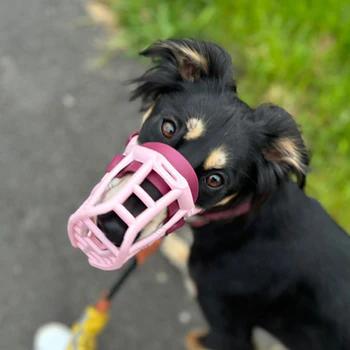
Not all muzzles are suitable for reactive dogs, or any dog wearing one for extended periods.
You want a basket muzzle. These have an open structure that lets your dog pant freely, drink water, and take treats. Your dog can breathe normally even when stressed or exercising. Baskerville is the classic brand, but there are better-fitting options now from companies like The Muzzle Movement who focus specifically on design and comfort.
Avoid fabric or mesh muzzles (the soft ones that hold the mouth closed). Dogs can't pant properly in them, which is dangerous since panting is how dogs cool down. These are meant for very short use only, like a quick vet procedure. Never for walks or training.
Fit matters more than brand. A muzzle that's too tight is uncomfortable. Too loose and your dog can get it off or catch it on things. Most muzzle companies have fitting guides, so measure properly rather than guessing.
You're looking for enough room to open the mouth fully and pant, a secure strap system (ideally with a connection to the collar so it can't be pawed off), padding or smooth edges where it contacts the face, and a treat hole or open front for training rewards.
You cannot just strap a muzzle on a reactive dog and head out. Well, you can, but you'll make everything worse. A dog who hasn't been conditioned to accept a muzzle will panic, paw at their face, and associate the muzzle with stress. Now you've got a reactive dog who's also muzzle-phobic.
Proper muzzle training takes a few weeks of short, positive sessions. The goal is for your dog to see the muzzle and think "good things happen" rather than "oh no."
Start by just holding the muzzle and letting your dog sniff it. Treat. Repeat until they're interested in the muzzle because it predicts food. Then hold the muzzle so they have to put their nose slightly inside to get a treat. Don't fasten it yet, just let them choose to engage.
After a few days of that, start increasing how long their nose stays in the muzzle before the treat comes. Smear peanut butter or squeezy cheese inside the end so they want to keep their nose in there. Still no fastening at this stage.
Once they're comfortable with that, start clipping the muzzle on for just a second, then immediately off and treat. Build up to a few seconds, then 30 seconds, then a minute. Always take it off while your dog is still comfortable, not when they're starting to stress.
Finally, practice wearing the muzzle around the house during normal activities. Then in the garden. Then on short, low-stress walks. By now your dog should be neutral or positive about the muzzle.
The whole process takes most people 3-4 weeks. If at any point your dog panics or refuses, you've moved too fast. Go back a step.
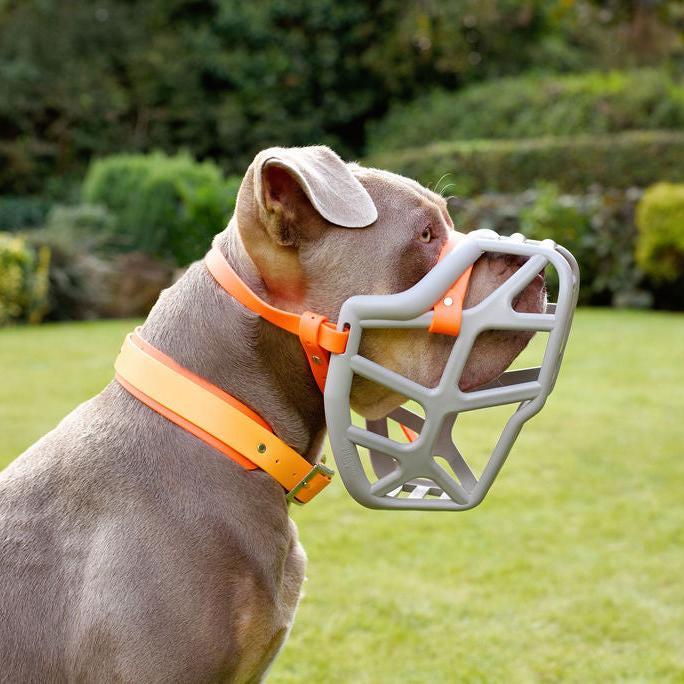
Once your dog is trained, the muzzle is just another piece of kit. You don't necessarily need it for every walk, but it's there when you need it.
Situations where a muzzle makes sense:
A muzzle isn't a substitute for training, distance management, or avoiding situations your dog can't handle. It's a backup. Think of it like a seatbelt: you don't plan to crash, but you wear one anyway.
Let's address this directly. Some people will see your muzzled dog and assume the worst. They'll cross the street dramatically. They might make comments. It's annoying.
But here's the reality: responsible dog owners muzzle their dogs when appropriate. Irresponsible ones don't bother, even when they should. The people who judge muzzled dogs usually don't know much about dogs. Their opinion isn't worth your stress.
If it helps, plenty of dogs wear muzzles for reasons that have nothing to do with aggression. Scavenging (eating rubbish, dead animals, poison bait). Post-surgery recovery. Breed-specific legislation. Greyhounds and other sighthounds who might chase small animals. The dog in the muzzle at the park might just be a hoover who eats everything off the ground.
Your dog wearing a muzzle says you're managing a situation responsibly. That's worth more than looking "normal."
This might seem like a tangent, but plenty of reactive dogs do flyball, agility, and other sports. Reactivity often comes from frustration or over-arousal, which can coexist with high drive and athletic ability.
At training, dogs are usually crated when not working. During competition, there's structure and distance. Many reactive dogs thrive in these environments because the rules are clear.
If you're doing dog sports with a reactive dog, a muzzle can be useful during warm-ups, in busy paddock areas, or whenever you're in spaces where dogs might be closer than your dog can handle. It's not common to see muzzles at flyball training, but it's not unheard of either. Do what works for your dog.
A muzzle won't:
It's a management tool, not a behaviour modification tool. If your dog is reactive, you still need to work on the behaviour itself, ideally with a qualified behaviourist who uses modern, reward-based methods. The muzzle keeps everyone safe while you do that work.
If you've decided a muzzle might help, here's the practical path:
How long you'll need the muzzle depends on your dog. It might be a permanent fixture, or just a tool you use while working through a training programme. I know plenty of reactive dogs who never fully relaxed around other dogs but lived perfectly happy lives with sensible management. There's no single right outcome here.
This post contains affiliate links. If you purchase through these links, we may earn a small commission at no extra cost to you. This helps support Flyball Hub.