•Dalton Walsh
New to canicross? Learn everything about running with your dog in the UK - equipment, training commands, and finding events near you.
By Dalton Walsh
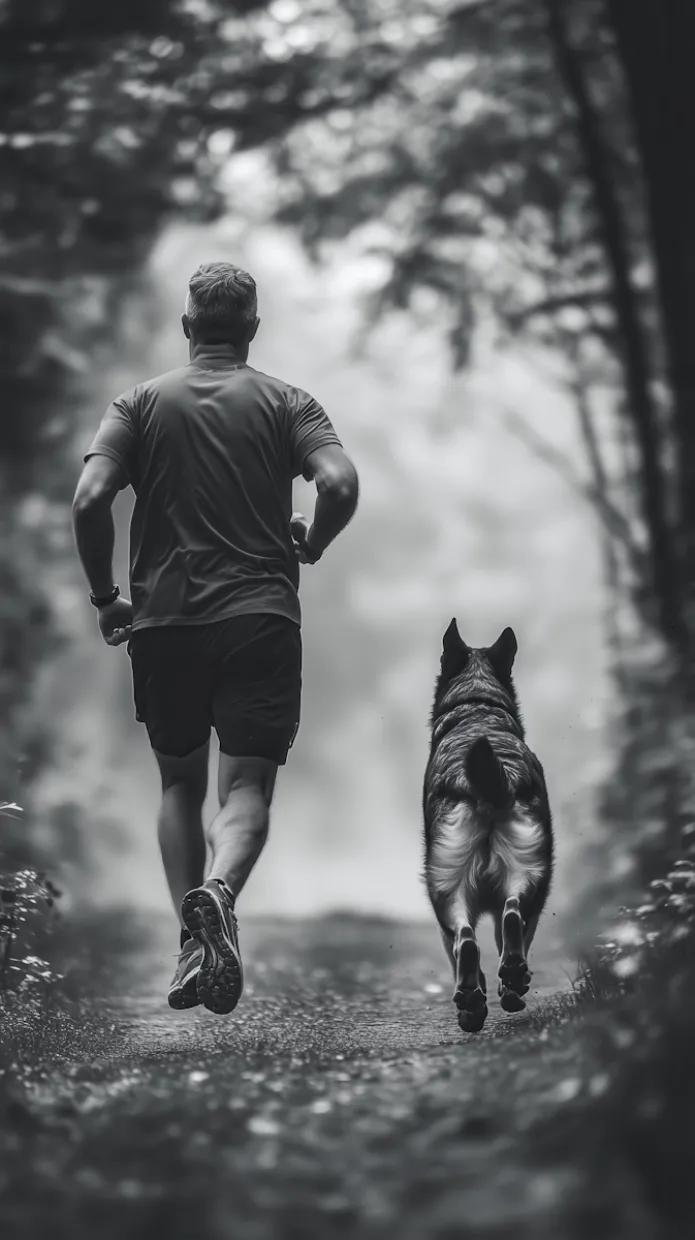
You've seen them on the trails - runners with dogs attached to their waists, moving together like a single unit. The dog out front, pulling slightly. The runner behind, matching pace. It looks smooth, natural, and frankly quite fun.
That's canicross. And it's one of the fastest-growing dog sports in the UK.
If you've got a dog with energy to burn and you fancy getting a bit fitter yourself, canicross might be exactly what you're looking for. This guide covers everything you need to know to get started.
Canicross is cross-country running with your dog attached to you. Your dog wears a pulling harness, you wear a belt around your waist or hips, and you're connected by a bungee line. Your dog runs in front and does some of the pulling work while you run behind.
The sport originated in Scandinavia as off-season training for sled dog teams. Mushers needed to keep their dogs fit through summer when there was no snow, so they started running with them on trails. The practice spread across Europe and hit the UK in the early 2000s.
Today canicross has its own competitive scene with organised races, clubs, and governing bodies. But plenty of people just do it recreationally - it's a brilliant way to exercise with your dog.
A few reasons this sport keeps growing:
A 5K canicross run is worth two regular walks. Your dog isn't just trotting along - they're working. The pulling engages their muscles differently, and the mental focus required to stay on task adds to the tiredness. Most dogs are genuinely knackered afterwards.
Your dog does help pull you along, but you're still running. Many people come to canicross as non-runners and end up completing races they never thought possible. Having a dog in front of you is surprisingly motivating - you can't just stop when you feel like it.
Dogs bred for work - collies, huskies, shepherds, pointers - often become difficult when they've got nothing to do. Pulling is an instinct for many breeds. Canicross channels that instinct into something productive. A dog with a job is a happier dog.
UK canicross clubs are famously friendly to beginners. There's no judgement about your pace or your dog's breed. Turn up, give it a go, ask questions. People remember what it was like to start.
The canicross season runs from autumn through spring - roughly September to April. Dogs overheat easily when running, so summer racing isn't really a thing. But our grey British winters? Perfect canicross conditions.
You can't do canicross with a regular lead and collar. The setup is specific to the sport, though the basic gear isn't complicated.
Your dog needs a proper pulling harness, not a walking harness. Pulling harnesses distribute pressure across the chest and body, allowing your dog to pull comfortably without choking or restricting movement.
The Y-shaped harness (also called an x-back) is most common for canicross. The straps form a Y across the chest and the line attaches at the back, near the tail base.
Look for:
Expect to pay £30-60 for a decent harness. Sizing matters - measure your dog carefully and check the manufacturer's guide.
You wear a belt around your waist or hips. This keeps your hands free and distributes the pulling force across your body rather than through your arms.
Canicross belts are wide and padded, designed to handle forward pull without digging in. Hip belts sit lower and work well for people with lower back issues.
Look for:
Expect to pay £25-50 for a proper belt.
The line connecting you to your dog should have bungee (elastic) built in. This absorbs shock when your dog surges forward or you change pace suddenly. A non-stretch line would jerk you both around.
Lines are usually 2-2.5 metres long with bungee in the middle section. They have a clip for the harness at one end and a loop or clip for the belt at the other.
Look for:
Bungee lines are usually £15-30.
You don't need special canicross shoes, but trail running shoes are strongly recommended over road runners. You'll be on paths, trails, and grass - surfaces where grip matters.
Good trail shoes have:
If you're buying new shoes for canicross, look at brands like Salomon, Inov-8, or Nike's trail range. But any trail shoe you already own will work fine to start with. See our full guide to the best trail running shoes for canicross.
For your first run you need:
Total starter cost: roughly £70-140 plus shoes. Not cheap, but not outrageous for a new sport. Many clubs lend kit to beginners, so ask before buying.
Your dog needs to learn a few things before you can run together properly.
Most dogs naturally want to stay beside or behind their owner. For canicross, you need them out front. This takes practice.
Start on walks. Encourage your dog forward using treats, toys, or just an excited voice. Reward any movement ahead of you. Gradually ask for more distance in front. Some dogs get this in a day. Others take weeks.
You don't need many commands, but these help:
Introduce commands one at a time. Pair the word with the action. Be patient - your dog isn't being stupid, they're learning a new language.
Your dog should keep light tension on the line at all times. A slack line is a tripping hazard and means they're not doing their job.
Some dogs pull naturally. Others need encouragement. Running behind a more experienced canicross dog can teach the idea - dogs learn well from other dogs.
Trail running means other dogs, runners, cyclists, and wildlife. Your dog needs to be able to focus on running past these distractions.
This is about training, not perfection. Most canicross dogs still react sometimes. The goal is reliable enough behaviour that you can run safely in busy areas.
If your dog is reactive to other dogs, canicross is still possible. Many clubs have specific sessions for dogs that need space. Talk to local clubs about your situation.
Don't go far to begin with. Even if your dog is fit, canicross uses muscles differently. Even if you're a runner, running with a pulling dog is different.
Run-walk for 1-2km. Short running intervals with walking breaks. Focus on keeping the line taut, staying balanced, and getting used to the sensation of being pulled.
Extend to 2-3km. Longer running intervals. Start working on commands if you haven't already.
You should be covering 3-5km fairly comfortably by now. Focus on smoothness. Work on your dog responding to commands reliably.
Dogs overheat much faster than humans. Above 14-15°C, most dogs will struggle with sustained running. In the UK, this means:
If your dog is panting heavily, drooling excessively, or slowing dramatically, stop. Find shade and water. Overheating is dangerous.
The UK has a healthy canicross scene with clubs across the country and a full calendar of events.
Most areas have a canicross club or a general dog sport club that includes canicross. Benefits of joining:
Search for "canicross" plus your county or nearest city. Canicross UK maintains a directory of affiliated clubs.
Once you're comfortable on training runs, events are a natural next step. The UK race calendar runs September to April with events most weekends.
Race distances typically include:
Events are timed but competitive pressure is low at the recreational end. Many people run purely against their own previous times.
Canicross UK and various regional organisations run events. Entries are usually online and fill weeks in advance for popular races.
Most events are friendly, muddy, and chaotic in the best way. Dogs love the atmosphere. Bring towels for the car.
Save yourself some frustration by avoiding these:
Already mentioned, but bears repeating. Dogs can't regulate temperature like humans. They're wearing a fur coat and working hard. Run cool or don't run.
Joint injuries from overtraining are common in dogs. Build distance gradually over weeks, not days. If your dog is stiff the day after a run, you did too much.
Canicross is a trail sport. Pavement is hard on joints for both of you and offers no grip. Find dirt paths, grass, or forest trails.
A harness that rubs, restricts, or sits wrong will hurt your dog and put them off the sport. Get fitted properly or measure carefully.
Your dog won't be perfect immediately. Neither will you. It takes months to develop as a team. Be patient.
What breeds can do canicross?
Any healthy dog over about 10kg with the fitness to run. The sport isn't breed-restricted. You'll see everything from huskies to labradors to spaniel crosses at events.
How old does my dog need to be?
Wait until growth plates have closed - typically 12-18 months depending on breed. Larger breeds mature later. Check with your vet if unsure.
Can I use a walking harness?
Not really. Walking harnesses attach at the top or front and restrict shoulder movement. Pulling harnesses attach at the back and are designed for forward motion.
What if my dog stops to sniff?
Some dogs are easily distracted. Training helps, but some sniffing is normal. The more you run, the more they'll learn that running time means running. Keep treats handy for motivation.
Is canicross bad for my back?
It can be if your belt doesn't fit properly or your dog pulls erratically. A good belt and consistent tension from your dog shouldn't cause problems. If you have existing back issues, try a lower hip belt and start with short distances.
Can I do canicross with two dogs?
Yes - that's called bikejoring if you're on a bike, or you can run with two dogs. It requires different equipment (a coupler line) and more training. Master one dog first.
Honestly, canicross has become one of my favourite ways to tire out an energetic dog. You both get fitter, your dog gets a job, and you'll probably make some friends along the way.
Your first step: find a local club. Most offer beginner sessions where you can try kit and run with experienced teams. One session will tell you whether this is your sport.
See you on the trails.
This post contains affiliate links. If you purchase through these links, we may earn a small commission at no extra cost to you. This helps support Flyball Hub.